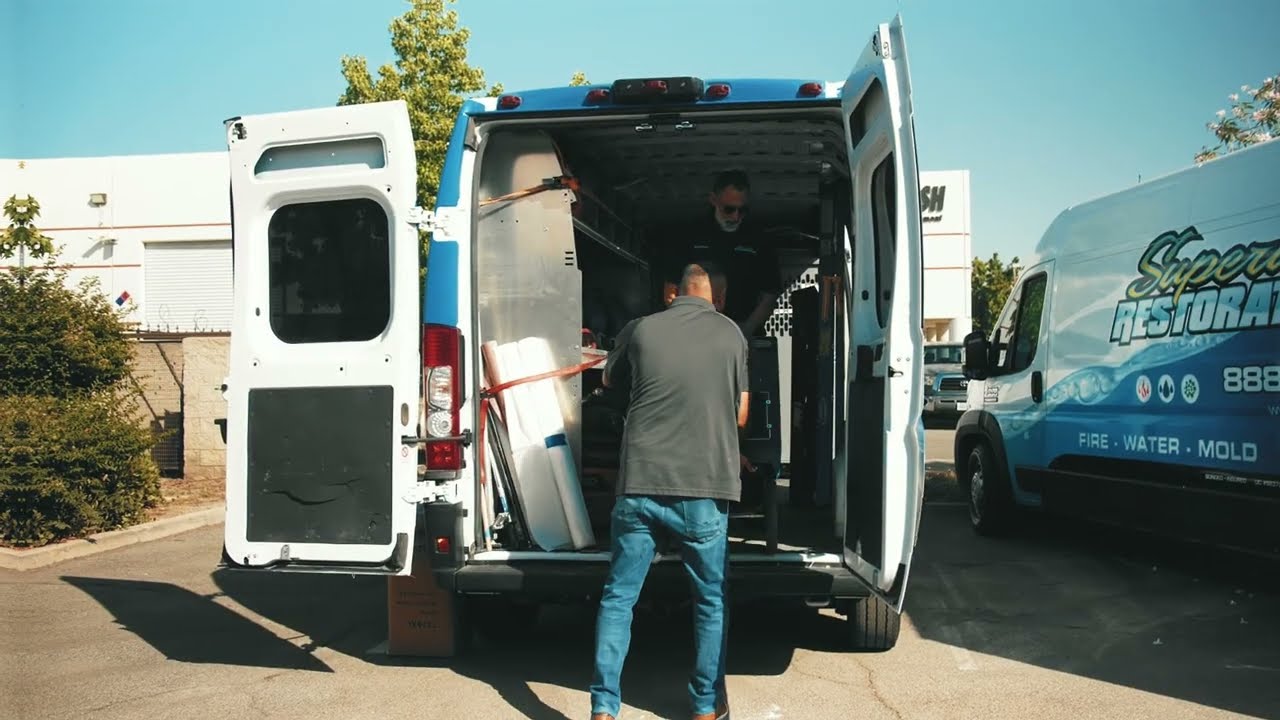





Water Damage Restoration in Fontana, CA
24/7 Emergency Response: (951) 579-4096
Superior Restoration provides water damage restoration throughout the City of Fontana from our Lake Elsinore office at 532 3rd Street, dispatched up the I-15 corridor into San Bernardino County. Our IICRC-certified technicians arrive with truck-mounted extractors, commercial air movers, and moisture mapping equipment ready to start the moment they reach the property. We respond 24/7, including weekends and holidays. We have been drying out water-damaged homes and warehouses across the Inland Empire since 2010, and Fontana sits at the center of the kind of work we do most: post-war steel-town housing, sprawling logistics floors, and a foothill flood profile that catches a lot of property owners off guard.
Why Water Damage in Fontana Is Its Own Problem
Fontana does not have one water-damage story, it has three running at once. The older south and central neighborhoods grew up around the Kaiser Steel mill in the 1940s and carry decades-old plumbing. The northern half exploded with master-planned tract housing after 2000, built on alluvial fans at the base of the San Gabriel Mountains. And in between sits one of the densest concentrations of distribution warehouses on the West Coast. Each carries a different failure pattern, and the right response looks different for each.
Built on Alluvial Fans Off the Foothills
Fontana sits on a gently sloping alluvial fan fed by Lytle Creek and Etiwanda Creek, with Cucamonga Peak and the San Gabriel Mountains rising directly to the north. That geography is the reason the northern neighborhoods exist as buildable land, and it is also why they flood the way they do. When a winter storm or an atmospheric river parks over the foothills, runoff and debris come down the fan fast. San Bernardino County flood control records the pattern going back decades, including the 1997 and 1998 storm seasons that did roughly $18 million in countywide damage and the December 2003 storms that sent debris flows through the foothill canyons. The neighborhoods closest to that base, Coyote Canyon, Hunter’s Ridge, and the upper edge of Sierra Lakes, sit where foothill runoff concentrates. Newer flat-lot construction is not immune. It changes how the water gets in, through garage thresholds, side yards, and grade that slopes back toward the slab.
Steel-Town Housing With Steel-Town-Era Plumbing
The Kaiser Steel plant started producing in 1942, and the housing that followed, including the Kaiser Tract and the tracts that filled in south and central Fontana through the 1950s and 1960s, is now 60 to 80 years old. Nearly all of it is slab-on-grade. That matters, because the supply lines under those slabs have been sitting in San Bernardino County’s hard water and shifting alluvial soil for two generations. Copper develops pinhole leaks. Cast iron drains corrode and crack. A slab leak in this kind of home does not announce itself. The first sign is usually a warm spot on a tile floor, a section of carpet that stays damp, or a water bill that jumped for no reason, and by the time it surfaces the moisture has been spreading under the slab for days.
One of the Largest Warehouse Markets in the Country
When Kaiser Steel went bankrupt in 1983, the 1,500-acre site became the Kaiser Commerce Center, and Fontana turned into a logistics hub. The city now holds millions of square feet of distribution space along the I-10, I-15, and 210 corridors. Water damage in a warehouse is a different animal than a house. A failed sprinkler head, a roof-drain backup, or a burst supply line can put water across tens of thousands of square feet of slab in minutes, soaking racked inventory and the bottom courses of stored product. The clock on a commercial loss is about business interruption, not just the building. We scope, extract, and dry commercial floors with that pressure in mind, documenting everything for the claim as we go.
Common Water Damage Causes in Fontana
Slab Leaks in Older Fontana Neighborhoods
The post-war and mid-century tracts across south and central Fontana are almost entirely slab-on-grade, and their copper supply lines are well past the age where pinhole leaks become routine. Soil movement on the alluvial fan stresses those lines further. When one fails under the slab, water wicks up through the concrete into flooring and the base of walls, and it can travel a surprising distance before it shows. We locate the source with moisture meters and thermal imaging rather than guessing where to open the floor.
Foothill Storm Flooding and Debris Flow
Properties in north Fontana near the foothill base take the brunt of storm runoff coming off the San Gabriels. Heavy rain over the mountains turns the creek washes and the engineered channels into fast-moving water, and when storm drains hit capacity it backs into streets, then into garages, side yards, and ground floors. Mud and grit ride along with it, which makes the cleanup a Category 3 job rather than a simple dry-out. Standard homeowner’s policies do not cover external flooding, which is the part that surprises people most.
Warehouse and Commercial Water Events
Fontana’s distribution buildings run miles of fire-suppression piping and large flat roofs with internal drains. A frozen or failed sprinkler line, a clogged roof drain during a downpour, or a ruptured supply line can flood a slab fast and reach stored inventory before anyone catches it. We deploy enough extraction and drying equipment to cover large commercial footprints and work around staged product and racking so the operation can keep moving where it safely can.
Water Heater and Appliance Failures
This is the everyday call, and it does not care how old the house is. Water heaters in slab homes are often in a garage or an interior closet, and when the tank lets go it can release 40 to 50 gallons at once. Washing machine supply hoses, refrigerator ice-maker lines, and dishwasher connections fail the same way in the newer north Fontana tracts as they do in the older ones. Caught early, these stay contained to one or two rooms. Left overnight, they reach subflooring and wall cavities.
Sewer and Drain Backups
The cast iron and clay drain lines under older Fontana homes corrode, scale, and crack with age, and root intrusion is common in established neighborhoods with mature trees. A main-line backup pushes contaminated water up through the lowest fixtures in the house. That is Category 3 water, and it requires full antimicrobial treatment and removal of porous materials it has touched, not just extraction and drying.
Our Water Damage Restoration Process for Fontana
Call (951) 579-4096. We dispatch to Fontana from our Lake Elsinore office at 532 3rd Street, north up the I-15. We respond around the clock, and the crew arrives with extraction, drying, and moisture-mapping equipment loaded so work starts on arrival rather than after a second trip.
Assessment: Thermal imaging and moisture meters map the full extent of the intrusion, including water that has wicked under a slab or traveled inside wall cavities. On commercial floors, we scope the affected footprint and identify what inventory and materials are salvageable. In older homes, we check for the hazards that come with the era before any demolition.
Water Extraction: Truck-mounted extractors pull standing water first. On large warehouse losses we stage multiple units to cover the footprint and keep water from migrating into unaffected bays.
Structural Drying: Commercial air movers and dehumidifiers bring materials back to target moisture levels, with daily readings logged at documented checkpoints. Fontana’s hot, dry inland summers actually speed drying, but the same dry heat masks how much moisture is still trapped under a slab or behind a wall, which is why we monitor with meters instead of by feel.
Cleaning and Sanitization: Storm flooding and sewer backups are Category 3 events. Both get full antimicrobial treatment and removal of contaminated porous materials, handled to IICRC standards.
Reconstruction: Drywall, flooring, baseboard, cabinetry, and paint are handled by our in-house team under one CSLB license, so there is no handoff between a drying company and a separate contractor.
Water Damage Restoration Cost in Fontana, CA
Costs in Fontana track with the rest of the Inland Empire. A single-room pipe burst or appliance failure typically runs $2,500 to $4,500. Multi-room events range from $6,000 to $14,000 depending on scope and how far the water traveled. Slab leaks add the cost of locating and accessing the line under the foundation. Commercial warehouse losses run higher across the combined scope, driven by square footage, affected inventory, and the speed required to limit business interruption.
Most homeowner’s policies cover sudden and accidental damage: burst pipes, appliance failures, water heater ruptures. They do not cover gradual leaks, deferred maintenance, or external flooding from storms and overwhelmed drains, which needs separate FEMA flood coverage. We document every loss with photographs, moisture data, and thermal imaging, and we work directly with your adjuster so the claim reflects the full scope.
Why Fontana Property Owners Choose Superior Restoration
One License, Full Scope: CSLB License #983759 covers everything from emergency extraction through final paint. One company, one point of contact, no finger-pointing between a restoration crew and a separate reconstruction contractor.
Residential and Commercial: Fontana’s mix of housing and large-scale logistics means we work both a slab-leak in a 1950s tract home and a sprinkler failure across a distribution floor. The equipment, the documentation, and the urgency look different for each, and we scope accordingly.
IICRC Certified: Every technician is certified to S500 water damage restoration standards, with Category 3 protocols for sewage and floodwater events.
24/7 Response: Water does not wait for business hours. Neither do we. Crews dispatch nights, weekends, and holidays, with the goal of getting extraction started before moisture sets into subfloor and framing.
367 Google Reviews at 4.9 Average: A reputation built job by job across the Inland Empire since 2010.
Common Questions About Water Damage in Fontana
How fast can you get to Fontana?
We dispatch from our Lake Elsinore office, about 42 miles south up the I-15. Response time depends on traffic and the time of day, but we run 24/7 and roll the moment a call comes in, with the truck loaded so extraction starts on arrival. For active flooding, the most useful thing you can do while we are en route is shut off the water source and kill power to affected areas if it is safe to reach the panel.
I have a slab home in central Fontana. How do I know if I have a slab leak?
Watch for a warm spot on a tile or vinyl floor, carpet that stays damp with no obvious source, the sound of running water when nothing is on, a sudden jump in your water bill, or a drop in pressure. Slab-on-grade homes from the post-war and mid-century tracts are the most common place we find these, because the copper under those slabs has been in the ground 60-plus years. Catching it early keeps the repair small.
My north Fontana home flooded during a storm. Is that covered by insurance?
Usually not by a standard homeowner’s policy. External flooding from storm runoff coming off the foothills, or from storm drains that backed up, is excluded from most homeowner’s coverage and requires separate FEMA flood insurance. A sudden internal failure, like a burst pipe, is typically covered. We document the cause and the path of the water either way, because that documentation is what determines coverage.
Do you handle water damage in warehouses and commercial buildings?
Yes. Fontana’s distribution corridors are a big part of what we do. Sprinkler failures, roof-drain backups, and supply-line bursts on a large slab call for high-volume extraction and enough drying equipment to cover the footprint without shutting down more of the operation than necessary. We document the loss for the claim, including affected inventory, as we work.
How long does water damage restoration take?
Extraction and structural drying typically run 3 to 5 days. Reconstruction adds 1 to 3 weeks depending on scope. A contained single-room event in a home usually wraps in about 2 weeks start to finish. Large commercial losses and Category 3 storm or sewer events take longer because of the added cleanup and the size of the affected area.
Should I worry about mold after water damage in Fontana?
Yes. Mold colonizes within 24 to 48 hours of water exposure. Fontana’s dry inland heat can give a false sense that things dried out, while moisture stays trapped under a slab or inside a wall and feeds mold growth out of sight. Professional drying with daily moisture monitoring is what prevents it, which is why we measure rather than assume.
Contact Superior Restoration for Water Damage in Fontana
When water damages your Fontana home or business, call our 24/7 emergency line at (951) 579-4096 or contact us online.
Serving Fontana From Our Lake Elsinore Office
Superior Restoration, 532 3rd Street, Lake Elsinore, CA 92530
(951) 579-4096
CSLB License #983759 | IICRC Certified Firm
Founded 2010 | Part of HighGround Restoration Group