




Fire Damage Restoration in Oceanside, CA
24/7 Emergency Response: (951) 579-4096
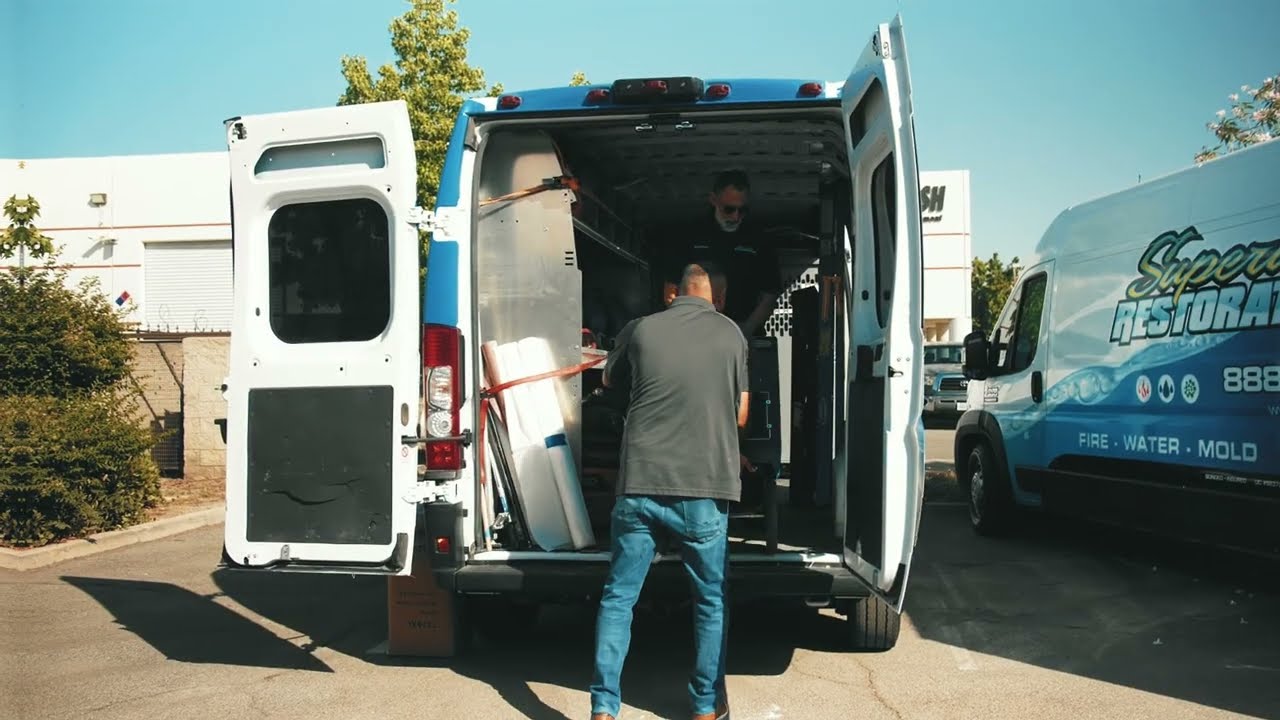
Superior Restoration provides fire damage restoration throughout the City of Oceanside from our San Diego office at 16130 W Bernardo Drive in Rancho Bernardo, roughly 25 miles south via SR-78 and Interstate 15. Our IICRC-certified technicians arrive with board-up materials, HEPA scrubbers, thermal imaging, and a full smoke-and-soot kit on the first truck. We have been restoring fire-damaged homes across San Diego County since 2010 under CSLB License #983759, with one in-house crew carrying the file from first response through reconstruction.
Why Oceanside Properties Face Specific Fire Damage Risks
Oceanside’s fire risk reads differently than the coastal narrative suggests. The western half of the city sits behind a marine layer most of the year. The eastern half climbs into hillside chaparral CAL FIRE has formally mapped as Very High Fire Hazard Severity Zones (VHFHSZ). Santa Ana wind events funnel west from inland San Diego County, dropping relative humidity into the single digits and pushing 50 to 70 mph gusts across Rancho Del Oro and Fire Mountain. Add Camp Pendleton’s wildland footprint, decades of military-rental turnover affecting deferred maintenance, and a 1950s-to-1980s hillside stock built before modern WUI codes, and the fire scope here is not what a franchise pricing model is built around.
The Eastern Hillside VHFHSZ Buffer
CAL FIRE’s Fire Hazard Severity Zone maps (osfm.fire.ca.gov) designate parts of east Oceanside as Very High Fire Hazard Severity Zones. The neighborhoods most directly affected sit on the eastern hillside flank east of College Boulevard and on the slopes climbing toward the SR-78 corridor. Fire Mountain, with its 1950s through 1980s hillside lots, carries one of the longest exposure profiles in the city because the housing predates modern ignition-resistant standards. Rancho Del Oro, the 1980s-to-2000s master-planned area east of I-5, sits on the WUI buffer where developed lots meet chaparral and oak woodland. Standard residential construction, but ember intrusion is the dominant ignition pathway, not flame-front contact. Whelan Ranch carries similar hillside exposure on the eastern flank.
The 2007 Witch Creek Fire and 2014 Cocos Fire
The 2007 Witch Creek Fire is the regional anchor for San Diego County wildfire risk. Ignited October 21, 2007 near Santa Ysabel, it burned 197,990 acres, destroyed roughly 1,650 structures, and pushed smoke and ash across nearly every coastal community in north and central San Diego County during the Santa Ana event that drove it. Oceanside did not lose neighborhoods to flame the way Rancho Bernardo did, but Santa Ana smoke reached coastal properties miles from the burn footprint, depositing soot in HVAC systems, on contents, and inside attic spaces through ember intrusion that did not produce ignition. Seven years later the 2014 Cocos Fire ignited in San Marcos and burned 1,995 acres on the inland north county foothills, threatening structures in San Marcos and Carlsbad and producing another regional smoke event. Neither fire is theoretical. They are the underwriting context Oceanside homeowners are still living with.
The Santa Ana Wind Pathway From Inland San Diego County
Santa Ana events funnel west and southwest from the inland desert side of San Diego County, dropping through passes that feed Camp Pendleton and the north county coast. By the time a Santa Ana reaches Oceanside, relative humidity has dropped into the single digits and gusts can exceed 60 mph. Wind-driven embers can travel a mile or more ahead of an active fire, landing in attic vents, eave gaps, skylight wells, and seams under cracked tile or aging asphalt-shingle roofing. That is the ignition pathway most Oceanside fire damage starts with, particularly on Fire Mountain, Rancho Del Oro, and the eastern Whelan Ranch slopes.
Oceanside’s Neighborhood Fire Risk Profile
Every Oceanside neighborhood carries a different fire exposure profile. Fire Mountain holds 1950s through 1980s hillside lots with tile roofing and underlayment now well past expected service life, pre-WUI-code attic vents, and mature non-native landscaping close to structures. Rancho Del Oro’s 1980s through 2000s stucco-on-slab tracts east of I-5 sit on the WUI buffer where developed lots meet chaparral on the SR-78 corridor. Whelan Ranch carries 1990s and 2000s custom and semi-custom development on the eastern slope with restoration scope variability tract construction does not produce.
The northern half of Oceanside carries dense military-family rental stock tied to 2-to-3-year Camp Pendleton rotations. Tenant turnover means dryer vents that haven’t been cleaned in years, range hood vents clogged with grease, aging electrical panels in pre-1990 stock, and smoke detectors with dead backup batteries. Kitchen, dryer, and electrical fires concentrate in the rental-heavy neighborhoods near the base. Downtown / Pier Plaza adds historic 1900s through 1950s stock with older electrical systems, pre-1980 commercial along Mission Avenue and Pacific Street, and continuity considerations for retail and hospitality occupancy. South Oceanside and Loma Alta carry 1920s through 1960s craftsman and mid-century construction south of the San Luis Rey River, with electrical-fire ignition profiles different from the post-2000 inland tracts.
Types of Fire Damage We Restore in Oceanside
Smoke and Soot Damage
Smoke does not stay where the fire was. It migrates through HVAC ductwork, wall cavities, and any opening between rooms, depositing soot on every surface within hours of ignition. Kitchen grease fires leave protein residue that is nearly invisible but smells terrible. Fast-burning structural fires produce dry, powdery soot. Smoldering ember-ignition fires that catch in attic insulation create wet, sticky soot. Each type requires a specific cleaning chemistry. Wrong approach sets stains permanently. In coastal Oceanside, where salt-air humidity raises the ambient moisture content of attic spaces and wall cavities, smoke residue clings longer and embeds deeper than it does in dry inland air.
Structural Fire Damage
Fire compromises load-bearing capacity in ways not always visible from the surface. Charred wood framing can look solid while having lost 40 percent or more of its structural integrity. Heat warps steel connectors and degrades concrete. In older South Oceanside and Downtown stock, original framing under decades of finish layers presents assessment challenges contemporary tract framing does not. In Rancho Del Oro stucco-on-slab construction, charring inside wall cavities is particularly easy to miss because the exterior stucco often shows only smoke staining. Our assessment identifies exactly what needs replacement versus what can be cleaned and retained.
Water Damage From Fire Suppression
Oceanside Fire Department engines pump hundreds of gallons per minute. On hillside lots in Fire Mountain and Rancho Del Oro, suppression water runs downslope into adjacent properties and pools in foundation contact areas at the base of slopes. Inside the structure, water soaks through floors, pools in wall cavities, and saturates insulation. If not dried within 48 hours, mold colonization begins. Oceanside’s year-round coastal humidity microclimate shortens that window further. We address fire and water damage simultaneously because treating them as separate problems creates gaps that show up weeks later as hidden mold. For non-fire water damage, see our Oceanside water damage restoration page.
Wildfire Ash and Debris Cleanup
Wildfire ash is caustic. It contains heavy metals, chemical residues from burned household products, and potentially asbestos from older structures within the fire’s path. For older Downtown and South Oceanside stock with pre-1980 construction, asbestos-containing material (ACM) exposure is a real consideration during cleanup of windborne ash deposition. Cleanup requires proper PPE, containment, and disposal procedures that follow Cal/OSHA and DTSC guidelines for San Diego County.
Emergency Board-Up and Tarping
Broken windows, compromised roofing, and structural openings need to be secured immediately after suppression clears the scene. Santa Ana wind events compound the problem. An open structure exposes the interior to wind-driven embers and ember-laden air during the same conditions that produced the original fire. We board up windows, tarp roof openings, and stabilize the structure within hours of clearance. On hillside Fire Mountain and Rancho Del Oro lots, board-up also accounts for downslope wind exposure that flat-lot procedures do not.
Hillside Scope and Response From Our San Diego Office
Fire Mountain, Rancho Del Oro slopes, and the Whelan Ranch flank push post-suppression water downslope into adjacent properties and accumulate that water in foundation contact areas at the base of slopes. A fire that affects one home on the slope often produces water and ember-deposition scope across the two or three properties directly downslope. Our hillside response stages with that in mind.
Our San Diego office at 16130 W Bernardo Drive sits roughly 25 miles south of central Oceanside via I-15 and SR-78. Drive time runs 30 to 40 minutes for most addresses. Eastern Oceanside neighborhoods (Rancho Del Oro, Whelan Ranch, eastern Fire Mountain) trend toward the lower end of that range. Coastal Downtown and Pier Plaza addresses add a few minutes. For active scenes still under Oceanside Fire Department or CAL FIRE San Diego Unit control, we stage at the perimeter and coordinate with the incident commander until the structure is released for entry.
Our Fire Damage Restoration Process for Oceanside
Call (951) 579-4096. We respond 24 hours a day, seven days a week.
Scene Coordination. If Oceanside Fire Department or CAL FIRE San Diego Unit is still active, we stage at the perimeter and begin the moment the structure is released, coordinating with the incident commander on multi-unit hillside scenes where downslope properties may also need assessment.
Board-Up and Tarping. Broken windows, compromised roofing, and structural openings get secured immediately. Late-season Santa Ana wind events accelerate secondary damage when a structure sits open. We seal the envelope first.
Assessment and Documentation. Every area of fire, smoke, soot, and suppression-water damage gets photographed and measured. For VHFHSZ properties, we also document defensible space conditions for AB38 records.
Water Extraction. If suppression created standing water, we extract and begin drying before soot cleaning. Wet soot is harder to remove than dry. Sequence matters.
Smoke and Soot Removal. Surfaces are cleaned with methods matched to the soot type. HEPA air scrubbers remove airborne particulates. Thermal fogging or hydroxyl generators neutralize embedded odor in cavities, ductwork, and insulation. HVAC systems get full duct cleaning and coil treatment.
Content Restoration. Salvageable belongings are inventoried, cleaned, deodorized, and stored. Everything is documented for insurance.
Reconstruction. Our in-house crew handles framing, drywall, electrical, plumbing, flooring, cabinetry, and paint. For VHFHSZ rebuilds, we build to current WUI codes: Class A roofing, ignition-resistant eaves and soffits, tempered glass, non-combustible decking within defensible space zones. For larger scope, see our damage reconstruction page.
Fire Damage Restoration Cost in Oceanside, CA
Restoration costs in the City of Oceanside vary by neighborhood and damage type. A contained kitchen fire with smoke damage in a Rancho Del Oro tract home runs $4,500 to $12,000. A multi-room structural fire in a 1960s Fire Mountain hillside home, with smoke migration through dated HVAC ductwork and post-suppression water in downslope foundation contact areas, typically runs $18,000 to $45,000. Significant structural fire requiring partial or full reconstruction in older Downtown or South Oceanside stock can exceed $80,000 depending on scope and City of Oceanside permitting timelines. Most homeowner’s policies cover fire damage, including wildfire damage and Santa Ana wind-driven smoke contamination. If your home is in an Oceanside VHFHSZ zone, your insurer may have specific defensible space requirements. We document everything with photographs, scope measurements, and HVAC contamination records, and we work directly with your adjuster.
Why Oceanside Homeowners Choose Superior Restoration for Fire Damage
16 Years Across the San Diego County Metropolitan Area. We have responded to fire damage across Oceanside, Carlsbad, Vista, San Marcos, Escondido, and the broader north county corridor since 2010, including the smoke-contamination event that followed the 2007 Witch Creek Fire.
IICRC Certified Firm With Fire and Smoke Damage Credentials. All technicians hold credentials from the Institute of Inspection, Cleaning and Restoration Certification. Every job follows IICRC professional standards.
One License, Full Scope. CSLB License #983759 covers everything from emergency board-up through final paint. One company, one point of contact, one estimate progression with your insurer.
Hillside and Coastal Experience. We restore 1950s Fire Mountain hillside customs with dated HVAC and underlayment, 1990s Rancho Del Oro tract homes, military-rental cottages along the eastside corridor, and historic stock in Downtown and Pier Plaza.
367 Google Reviews, 4.9-Star Average. Reputation built job by job over 16 years.
Common Questions About Fire Damage Restoration in Oceanside
When can I return to my Oceanside home after a fire?
Not until Oceanside Fire Department or CAL FIRE San Diego Unit clears the structure. Even after clearance, we recommend waiting for our air quality assessment. Smoke residue and airborne particulates cause respiratory problems, especially in tightly sealed homes where soot has entered the HVAC system. We deploy HEPA air scrubbers to bring air quality to safe levels before you spend extended time inside.
How long does fire damage restoration take in Oceanside?
A contained kitchen fire with smoke damage typically takes 1 to 3 weeks. Significant structural fire damage requiring reconstruction runs 3 to 5 months depending on scope and City of Oceanside permitting timelines. Wildfire damage involving multiple building systems can take longer, particularly for Fire Mountain and Rancho Del Oro hillside properties with downslope water migration and outbuilding scope.
Is smoke damage covered if my home did not burn?
Yes, in most cases. Wildfire smoke can contaminate homes miles from the active fire perimeter, depositing soot in HVAC systems, on contents, and inside wall cavities through ember intrusion that did not produce ignition. The 2007 Witch Creek Fire produced significant smoke contamination across Oceanside even though the fire did not reach the city. Most policies cover smoke damage as a covered peril. We document airborne contamination, surface deposition, and HVAC contamination so the claim accurately reflects the scope.
What is the AB38 defensible space requirement for Oceanside homes?
AB38 (California Civil Code 1102.19) requires a defensible space inspection when homes in Very High Fire Hazard Severity Zones are sold. If your eastern Rancho Del Oro, eastern Fire Mountain, or Whelan Ranch property needs post-fire reconstruction, we rebuild with fire-resistant materials and document defensible space conditions for future sale readiness.
Should I worry about mold after a fire if suppression water soaked the structure?
Yes. Mold colonizes within 24 to 48 hours of water exposure, and Oceanside’s coastal humidity microclimate compresses that window further. Post-suppression mold is one of the most common secondary problems on hillside fire jobs where water pools in foundation contact areas. See our Oceanside mold remediation page for the mold-specific scope.
Do you work with my insurance company directly?
We do. Fire claims are the most complex in residential insurance, particularly when smoke contamination, post-suppression water, and reconstruction are all in the same scope. We document thoroughly, communicate directly with adjusters, and keep the claim moving. We work with most major insurers across San Diego County.
Contact Superior Restoration for Fire Damage in Oceanside
When fire damages your Oceanside home or business, call our 24/7 line at (951) 579-4096 or contact us online.
Serving Oceanside From Our San Diego Office
Superior Restoration, 16130 W Bernardo Dr, San Diego, CA 92127
(951) 579-4096
CSLB License #983759 | IICRC Certified Firm
Founded 2010 by Skylar Lewis | Part of HighGround Restoration Group