

Mold Remediation Services in Southern California
24/7 Emergency Response: (951) 579-4096
Mold doesn’t wait. The 24-to-48-hour window after water intrusion is when mold colonies begin establishing — and Southern California properties hit this window regularly. An atmospheric river event, a slab leak in a Riverside County townhome, a roof penetration from a rare winter storm.
Every one of those situations sets a timer. What happens in the first day or two determines whether you’re dealing with a manageable remediation or a wall-to-wall mold event two weeks later.
Superior Restoration handles mold remediation across all five Southern California counties we serve: Riverside, Orange, San Diego, San Bernardino, and Los Angeles. Our technicians hold IICRC certifications under the S520 Standard for Professional Mold Remediation, which means every project follows a documented protocol – not a best-guess approach.
Why Southern California Has a Mold Problem
People assume the SoCal climate protects against mold. Dry, sunny, low humidity. The assumption is wrong. Mold thrives in hidden moisture pockets, not ambient air. And Southern California creates those pockets constantly.
The marine layer pushes coastal condensation into wall cavities in Orange County and San Diego communities. Slab-on-grade construction — the dominant foundation type throughout the Inland Empire and beyond — keeps crawlspaces out of the equation but traps moisture between concrete and flooring. Stucco exteriors, sealed tight in dry years, hold water against sheathing after winter storms. And the region’s older housing stock in cities like Anaheim, Long Beach, and Riverside carries decades of plumbing wear that fails quietly — sometimes for weeks or months before anyone notices.
Southern California’s boom-bust rainfall cycle is the other factor. Properties sit dry for 8 or 9 months, then take on significant moisture during atmospheric river events in a compressed window. That fast saturation of dry materials, followed by trapped heat in spring, creates near-ideal mold growth conditions inside building assemblies.
How Mold Remediation Works
Effective remediation isn’t just scrubbing what you can see. Visible surface mold is the indicator — the actual problem is the moisture source and the extent of hidden growth in building materials. Our process addresses both.
Inspection and Testing
We start with a thorough visual inspection and moisture mapping to identify all affected areas. When the extent of contamination is unclear, air sampling and surface testing establish baseline spore counts and identify mold species. This documentation matters for insurance claims and for verifying clearance after remediation is complete.
Containment
We isolate the work area using physical barriers and negative air pressure. This prevents mold spores from migrating to unaffected parts of the property during removal. HEPA filtration runs continuously during the remediation process.
Removal and Cleaning
Porous materials that can’t be adequately cleaned — drywall, insulation, carpet — are removed and disposed of following EPA guidelines. Non-porous structural materials are cleaned with EPA-registered antimicrobial agents. Wood framing, where salvageable, is treated and dried to below 16% moisture content before enclosure.
Drying and Moisture Control
Remediation without fixing the moisture source is temporary. We identify and address the underlying cause — a plumbing leak, inadequate ventilation, roof penetration, or grading issue — and verify that affected materials reach drying goals before any reconstruction begins. We use the same industrial drying equipment from our water damage division, not consumer-grade dehumidifiers.
Post-Remediation Verification
We verify clearance through visual inspection and, where testing was conducted initially, follow-up air sampling to confirm spore counts have returned to normal background levels. This documentation goes into your claim file.
Mold Remediation at Each Location
Our four Southern California offices handle mold remediation for their surrounding service areas. Each page covers the specific conditions, housing characteristics, and response capabilities for that region.
Lake Elsinore Mold Remediation: Serving Lake Elsinore, Wildomar, Canyon Lake, Menifee, Perris, and surrounding Riverside County communities. Heavy water damage history from San Jacinto River flooding and atmospheric river events makes mold a consistent secondary issue in this market.
Murrieta Mold Remediation: Serving Murrieta, Temecula, Fallbrook, and the southwest Riverside County corridor. Post-wildfire water damage from suppression efforts creates mold conditions in fire-affected properties. New construction from the 2000s building boom is now entering its first major plumbing maintenance window.
San Diego Mold Remediation: Serving the northern and central San Diego County communities from our Rancho Bernardo office. Marine layer condensation, older housing stock in inland communities, and post-wildfire mold in properties affected by 2003 and 2007 fire events are the primary drivers here.
Anaheim Mold Remediation: Serving Anaheim, Orange, Garden Grove, Santa Ana, and surrounding Orange County communities. Anaheim’s housing stock is among the oldest in our service area — tract homes from the 1950s and 1960s with original plumbing and framing that has cycled through decades of moisture exposure.
Insurance and Documentation
Most homeowner’s insurance policies cover mold remediation when it results from a covered peril — a burst pipe, storm intrusion, appliance failure. Mold from chronic neglect or gradual leaks is typically excluded.
Our documentation process is designed around insurance claims. Moisture readings, thermal imaging, air sample results, photo documentation by zone, and drying logs all go into a single claim file. We communicate directly with your adjuster and can provide scope-of-work documentation in whatever format your carrier requires.
If you’re uncertain whether your situation is covered, get us on-site first. The assessment gives you the information your carrier needs to make a determination — and stopping the damage progression protects your claim regardless of coverage outcome.
Common Questions About Mold Remediation
How long does mold remediation take?
It depends on the extent of growth and the materials affected. A single bathroom with surface mold from a slow leak might take one to two days. A wall cavity or floor system affected by a slab leak that went undetected for weeks can take five to seven days, including drying time. We give you a timeline after the initial assessment, not before.
Do we have to leave during remediation?
For small, well-contained projects, displacement is often not necessary. For larger projects with significant containment and negative air pressure systems, temporary displacement is typically the right call. We’ll tell you honestly based on the scope — not based on what’s convenient for scheduling.
Can mold come back after remediation?
Yes, if the moisture source isn’t resolved. Remediation removes existing mold growth. If water continues to intrude through the same path — a roof that still leaks, a pipe still dripping, inadequate ventilation — mold will return. We address the source as part of the project.
How do I know if I have mold?
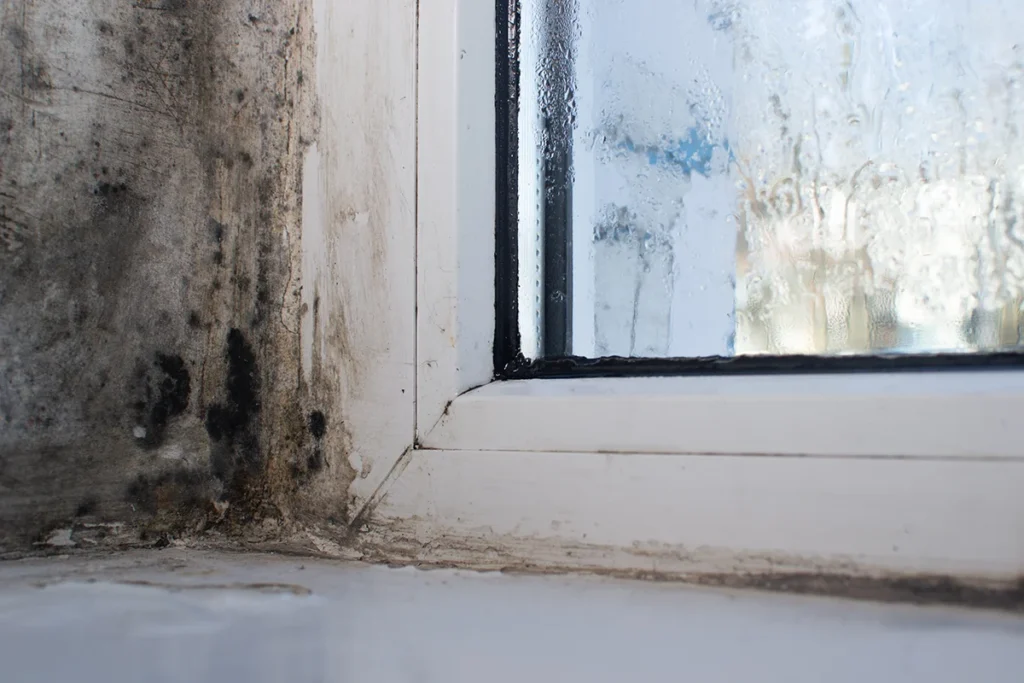
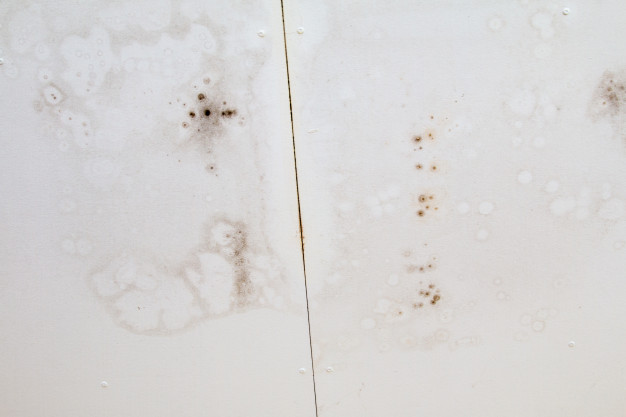
Musty odor in a specific room, visible discoloration on drywall or ceilings, persistent condensation on windows or walls, or a recent water damage event that wasn’t fully dried within 48-72 hours are all indicators. You don’t need to see black growth to have a mold problem. Call us for an assessment if you’re suspicious.
Is black mold different from other mold?
“Black mold” typically refers to Stachybotrys chartarum, which requires sustained very high moisture levels to grow. Most residential mold events involve Cladosporium, Penicillium, or Aspergillus species, which are more common and develop faster. All mold growth in occupied structures should be addressed, regardless of species. The IICRC S520 standard governs our process for all mold types.
Will you work with my insurance company?
Yes. We document everything, communicate directly with your adjuster, and structure our scope of work around your carrier’s documentation requirements. We’ve worked with every major insurer operating in Southern California.
Contact Superior Restoration
For mold remediation anywhere in Southern California, call our 24/7 line at (951) 579-4096 or contact us online.
Superior Restoration
IICRC Certified Firm | CSLB License #983759
Serving Riverside, Orange, San Diego, San Bernardino, and Los Angeles Counties
Part of HighGround Restoration Group