




Mold Remediation in Ontario, CA
24/7 Emergency Response: (951) 579-4096
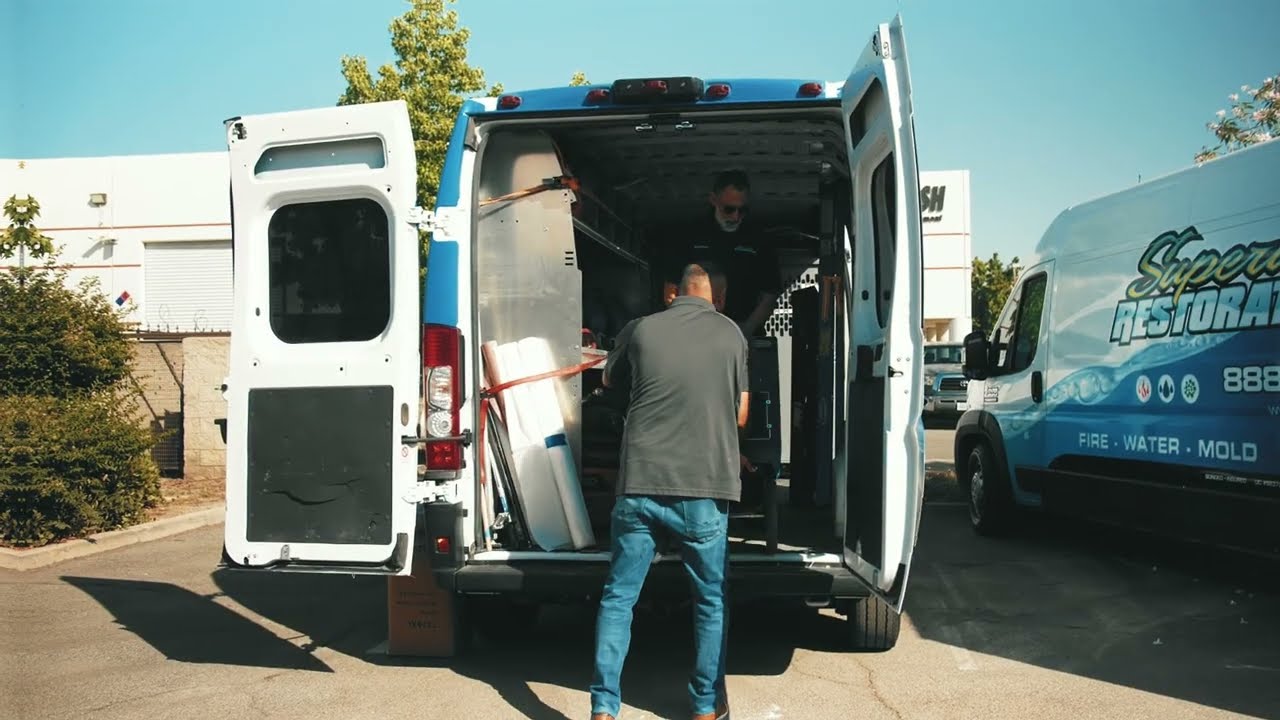
Most Ontario mold calls do not come from properties that flooded. They come from properties where moisture has been working a wall cavity, a slab edge, or a warehouse rack-storage column for months. Superior Restoration provides IICRC S520 mold remediation across the City of Ontario from our Anaheim office at 1260 South Simpson Circle, roughly 30 miles east via SR-91, I-15, and I-10. Our certified technicians arrive with moisture mapping equipment, HEPA air scrubbers, containment systems, and full S520 remediation tooling. We do not have a GBP-verified office in San Bernardino County. We dispatch the I-10 western corridor from Anaheim and the central plus eastern county from Lake Elsinore. We tell customers that on the first call.
Why Ontario Properties Develop Mold in Three Specific Patterns
Mold colonizes within 24 to 48 hours of water exposure. In Ontario the failure profile splits across three patterns no other Tier 3A city in this cluster carries together: commercial and warehouse moisture intrusion along the I-10 / SR-60 / I-15 logistics corridor, interstitial slab-edge mold inside 1960s and 1970s tract construction between Mountain Avenue and Euclid, and hard-water humidifier and HVAC condensate patterns from the Cucamonga Valley Water District and Inland Empire Utilities Agency service area. None of these show up as visible blooms during the first 30 days. All of them feed S520-scope remediation work by month three. We follow IICRC S520, the professional standard for mold remediation, on every job we touch.
Warehouse and Commercial Moisture Intrusion
Ontario’s logistics corridor is a different mold risk profile than any residential cluster in the western Inland Empire. Distribution centers along Mission, hotels along Holt and Airport, retail at Ontario Mills, and light industrial along the I-10 / SR-60 / I-15 convergence all run high-bay storage, slab-on-grade construction at very large floor plates, and HVAC systems sized for spaces no residential calculation maps onto. Moisture intrusion patterns differ: roof drainage failures in flat-roof construction, loading-dock seal failures pulling humid outside air through gaps during summer monsoon humidity, slab-edge water tracking under rack-storage footings, and sprinkler system pinhole leaks dripping behind racking for months. Each creates mold colonization across cardboard packaging, paper-faced gypsum, and organic dust accumulation. Standard residential protocols do not address commercial scope at the right scale.
1960s and 1970s Slab Construction and Interstitial Mold
The Ontario neighborhoods between Mountain Avenue and Euclid carry tract construction from the 1950s through the 1970s, with raised foundations transitioning to slab across the era. By 1965, slab-on-grade dominated. Those slabs were poured with the vapor barrier standards of the day, which were not the vapor barrier standards of 2026. Six decades of moisture cycling produces slab-edge vapor drive into wall plates and mold colonization inside wall cavities at the slab line, with progressive failure of the bottom 8 to 12 inches of drywall in homes where the surface still looks perfectly dry. The trigger is rarely a single water event. It is the cumulative moisture history of a structure that turns 65 this decade.
Hard Water HVAC and Humidifier Patterns
Ontario’s water supply, served largely by the Cucamonga Valley Water District and the Inland Empire Utilities Agency wholesale system, runs in the 200 to 300 parts per million hardness range. That mineral load deposits calcium across water heater tanks, HVAC condensate pans, evaporator coils, and any whole-house humidifier on the air handler. Calcium-coated drain pans clog. Clogged drains overflow. Overflow water runs into ceiling cavities below attic-mounted air handlers, the default install position in most Ontario tract homes. The mold colonizes in spaces homeowners never see. The first symptom is a musty smell that does not clear with surface cleaning.
Common Hidden Mold Locations in Ontario Properties
Warehouse Slab Edges and Rack-Storage Footings
Warehouse floor plates of 50,000 to 250,000 square feet create extensive slab-edge perimeter where vapor drive, drainage failures, and loading-dock seal gaps converge. Moisture tracks under rack footings into stored product and soaks the bottom 12 to 24 inches of paper-faced gypsum partition walls. The first sign is usually a tenant product complaint. By then the mold has been working for months. Remediation requires partial inventory relocation, perimeter slab assessment, and S520 containment at commercial scale.
Interstitial Slab-Edge in 1960s Tract Construction
The Colony district, Mountain Vista, Mountain Village, and the neighborhoods east of Euclid carry slab-on-grade construction from the 1960s. Vapor barriers from that era were 4 to 6 mil polyethylene at best, often torn during pour or omitted under perimeter footings. Six decades of moisture cycling drives water vapor up through the slab and into wall plates. The bottom 8 to 12 inches of drywall colonizes mold from the inside out. Surfaces look fine. Smell tells you otherwise.
Post-Rainfall Slab-Perched Moisture in the Euclid Avenue Corridor
Properties along the Euclid Avenue residential corridor, built between the 1920s and the late 1940s, sit on clay-heavy soils that hold water at the surface after winter rain events. Atmospheric river events in February 2024 produced the highest local channel levels since 2019. That rainfall did not flood any Euclid Avenue home, but it perched moisture at and around foundation perimeters for days. In raised-foundation homes the moisture migrates into crawlspaces. In post-1940s slab transitional construction it tracks into bottom plates. Either pathway feeds mold over the following 60 to 90 days.
Attic-Mounted Air Handlers and Hard-Water Condensate Pans
Most Ontario tract homes built between 1980 and 2010 use attic-mounted air handlers. Drain pan corrosion plus clogged condensate lines plus 130-degree-plus summer attic temperatures plus 200 to 300 parts per million water hardness equals water in places homeowners never see. Original HVAC equipment from 2000-era construction is now 25-plus years old. Worn seals, corroded pans, and degraded duct insulation create condensation pathways that feed mold above ceilings.
Ontario Ranch Stucco-on-Slab Construction
Ontario Ranch on the southern flank below Riverside Drive carries post-2010 stucco-on-slab construction with post-tensioned slabs. New construction does not mean immune. Weep screed gaps, stucco crack moisture intrusion at the slab line, and original water heater service intervals approaching their first failure window all create moisture pathways. The clay soil under former dairy land holds water at the surface in patterns the grading plans did not always anticipate.
Bathroom and Laundry-Adjacent Walls
Shower valve connections, toilet supply lines, and sink drain assemblies develop leaks over time across every housing era in Ontario. Pre-1950 stock carries original cast iron drains. 1960s through 1970s stock carries galvanized supply with copper transition. Newer construction carries PEX with brass fittings. Each generation has its own failure pattern. The wall cavity behind the failing fixture is warm, dark, and gets just enough moisture from a slow leak to sustain mold growth on paper-faced drywall.
The Cucamonga Wash Microclimate and Why It Matters After Atmospheric Rivers
The Cucamonga Wash and the Cucamonga-Guasti Regional Park sit in the southwestern part of Ontario, anchoring storm water infrastructure relevant to flood scoping during atmospheric river events. The wash itself is not the mold problem. The microclimate around it is. Properties within roughly half a mile of the wash corridor and the Ontario Mills basin sit on lower-elevation grading that perches groundwater during sustained rainfall. After the February 2024 atmospheric river events, we saw a measurable cluster of mold calls 60 to 90 days later from properties in this corridor where no surface water had entered the home. The moisture was working through the slab perimeter, the bottom plates, and the wall cavities for the entire dry-out window between rain events. By the time the homeowner smelled it, the colonization was three months old. Standard tract-home mold protocols apply with less margin in this microclimate.
Our Mold Remediation Process in Ontario
Call (951) 579-4096. Our Anaheim office at 1260 South Simpson Circle is 30 miles from central Ontario via SR-91, I-15, and I-10. Drive time runs 35 to 50 minutes depending on traffic. We respond 24 hours a day, seven days a week. Every job follows IICRC S520 protocol.
Inspection and Moisture Mapping. Moisture meters and thermal imaging identify where water is present, not just where mold is visible. Finding and fixing the moisture source is step one. Without that, remediation is temporary.
Containment. We isolate the affected area with physical barriers and negative air pressure. HEPA filtration prevents mold spores from spreading to unaffected parts of the property during removal. Non-negotiable. Disturbing mold without containment makes the problem worse.
Removal of Affected Materials. Mold-contaminated drywall, insulation, paper-faced packaging materials in commercial settings, and other porous materials are removed and disposed of properly. Non-porous surfaces like framing lumber and structural steel can often be cleaned and treated rather than replaced, depending on extent of colonization.
HEPA Vacuuming and Antimicrobial Treatment. All surfaces within the containment zone are HEPA vacuumed and treated with antimicrobial agents. Air scrubbers run continuously until particulate counts return to normal.
Verification. Post-remediation moisture readings confirm the area is dry. If pre-remediation testing was performed by a third-party industrial hygienist, clearance testing verifies spore counts have returned to acceptable levels.
Reconstruction. New drywall, insulation, flooring, and paint restore the area to pre-loss condition. Our in-house team handles everything under CSLB License #983759. For larger reconstruction scope, see the damage reconstruction pillar. When mold remediation follows a water event, see our Ontario water damage page. When it follows a fire and post-suppression water created the colonization, see our Ontario fire damage page.
The Logistics Corridor and the Commercial Mold Profile
Warehouse and distribution-center mold response is the Ontario story no other Tier 3A city in this cluster owns. A 100,000 square foot distribution center with a slab-edge moisture pattern, rack-stored inventory worth more than the structure, and a tenant operating under a continuity-strict lease is a different remediation conversation than a 2,200 square foot tract home. Inventory relocation. Phased containment by zone. Commercial adjuster documentation paths. Continuity-of-operation coordination with the property manager and the tenant during the same site visit. Hotels along Mission add guest-safety considerations and food-safe contents on the hospitality side. Retail at Ontario Mills adds customer-flow and merchandise protection. See our commercial restoration page for the full commercial scope, and our mold remediation pillar for the underlying process.
Why Ontario Property Owners Choose Superior Restoration for Mold Remediation
16 Years Across Southern California. We have remediated mold from Anaheim, Lake Elsinore, Murrieta, and San Diego offices since Skylar Lewis founded the company in 2010. Every housing era, every commercial scope, every structural variation. We know the patterns Ontario produces.
IICRC S520 Certified. All technicians hold certifications from the Institute of Inspection, Cleaning and Restoration Certification. Mold has its own standard separate from water damage’s S500: different containment, different verification, different documentation. We follow S520 on every job.
Source Identification First. We do not just remove mold. We find and fix the moisture source feeding it. That is the difference between a remediation that lasts and one that comes back in six months.
Logistics-Corridor Commercial Scope. Warehouse, distribution-center, hotel, retail, and light-industrial mold response at the scale Ontario’s logistics corridor requires. Continuity of operation handled in-house.
367 Google Reviews, 4.9-Star Average. Across our four offices. Reputation built job by job over 16 years.
Full Restoration Capability. Mold remediation often requires removing drywall, insulation, and flooring. We handle the rebuild too. CSLB License #983759 covers the full scope, so you do not need to coordinate between separate contractors.
Common Questions About Mold Remediation in Ontario
How fast does mold grow after a water event in Ontario?
Mold colonizes within 24 to 48 hours of water exposure. Ontario summer attic temperatures above 130 degrees and slab-edge vapor drive in older tract construction can extend or compress that timeline depending on where the moisture is sitting. If you discover water damage that has been sitting for more than two days, mold testing should be part of the restoration process. The first 48 hours are when professional drying matters most.
Why do older Ontario homes between Mountain and Euclid show mold without an obvious leak?
Six decades of slab-edge vapor drive in 1960s and 1970s slab-on-grade construction colonizes mold inside wall cavities at the slab line. The surface drywall still looks fine. The bottom 8 to 12 inches of the wall cavity does not. Source identification requires moisture mapping inside the cavity, not just surface inspection.
Do you remediate mold in warehouse and distribution-center properties along the Ontario logistics corridor?
Yes. Commercial mold response is a core part of our Ontario work. Slab-edge moisture intrusion, roof drainage failures, sprinkler system pinhole leaks, and loading-dock seal failures all feed mold patterns no residential protocol covers. Inventory relocation, phased containment, and commercial adjuster documentation are part of the first-call scoping.
Do I need pre-remediation mold testing?
Not always. If mold is visible and the affected area is under 10 square feet, testing before remediation is optional. For larger areas, insurance disputes, real estate transactions, or any commercial-scope job, pre-remediation testing by a third-party industrial hygienist establishes baseline conditions, and post-remediation clearance testing verifies the work was effective. We can recommend qualified testing firms.
How does containment during mold remediation work?
We isolate the affected area with physical plastic barriers floor to ceiling and create negative air pressure inside the containment using HEPA-filtered air scrubbers. This prevents mold spores from spreading to unaffected parts of the property during removal. Containment integrity is verified throughout the job. Disturbing mold without containment makes the problem significantly worse.
What symptoms suggest professional mold inspection is warranted?
A persistent musty smell that does not clear with cleaning, visible discoloration at baseboards or ceiling seams, allergy-type symptoms that improve when you leave the property, or any of these patterns appearing within 6 weeks of a known water event. In commercial buildings, tenant complaints about respiratory symptoms or product damage in specific zones are decision-tree signals. These are signals to call a professional inspection, not medical diagnostic claims. We assess and recommend testing if conditions warrant it.
Contact Superior Restoration for Mold Remediation in Ontario
When you suspect mold in your Ontario home or business, call our 24/7 line at (951) 579-4096 or contact us online.
Serving Ontario From Our Anaheim Office
Superior Restoration, 1260 South Simpson Circle, Anaheim, CA 92806
(951) 579-4096
CSLB License #983759 | IICRC Certified Firm | IICRC S520
Founded 2010 by Skylar Lewis | Part of HighGround Restoration Group