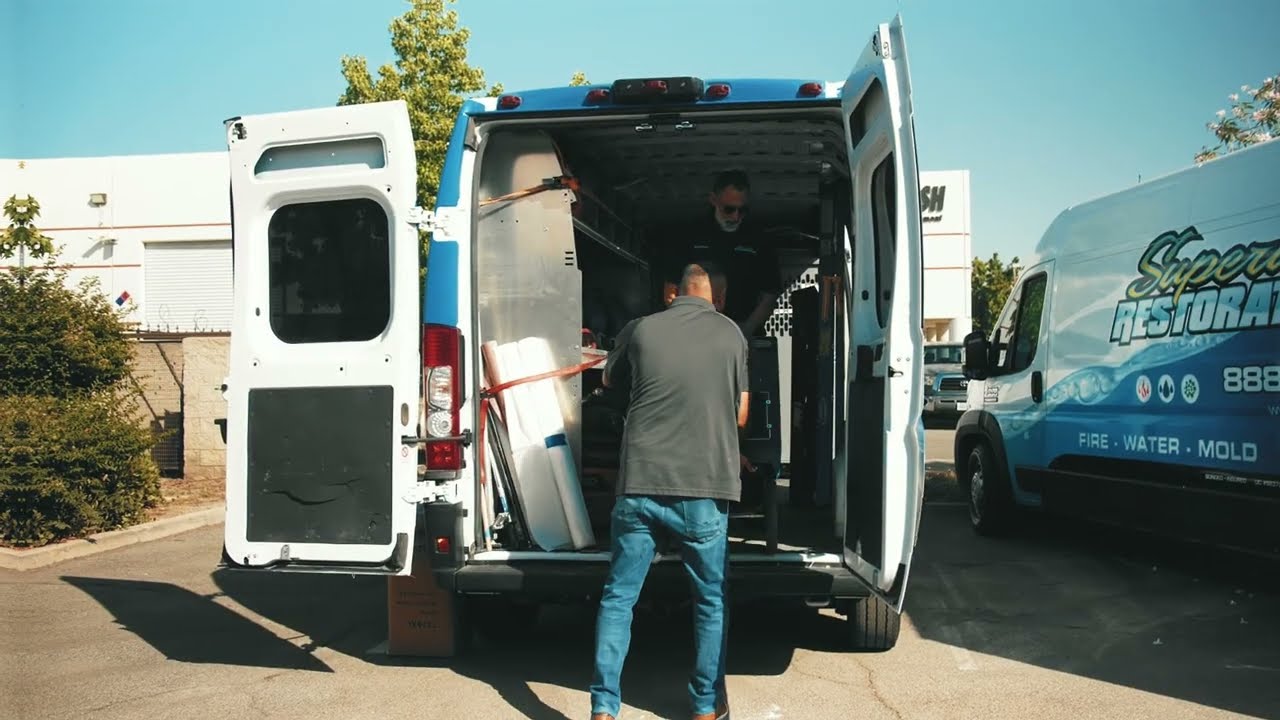





Mold Remediation in Corona, CA
24/7 Emergency Response: (951) 579-4096
Most Corona mold calls don’t come from the homes that flooded last week. They come from the homes that thought they handled a slow drip last winter. Superior Restoration provides IICRC S520 mold remediation throughout the City of Corona from our Lake Elsinore HQ at 532 3rd Street, roughly 16 miles south via Interstate 15. Far-western Corona along the SR-91 corridor is also reachable from our Anaheim office at 1260 South Simpson Circle. Our certified technicians arrive with moisture mapping equipment, HEPA air scrubbers, containment systems, and full remediation tooling. We have been remediating mold across Riverside County since Skylar Lewis founded the company in 2010.
Why Corona Properties Develop Mold More Often Than Homeowners Expect
Mold colonizes within 24 to 48 hours of water exposure, and Corona’s inland summer attic temperatures often above 130 degrees accelerate that timeline once moisture is already present. The problem in Corona is rarely the visible kind. It lives in 1980s and 1990s stucco-and-slab wall cavities, in hillside crawlspaces fed by slope-perched groundwater along the south Corona ridge, and in floor-ceiling assemblies in two-story tract homes from Sierra Del Oro through Eagle Glen where pinhole leaks have been feeding cavity moisture for months before anyone noticed a smell. We follow IICRC S520, the professional standard for mold remediation, on every job.
The Prado Basin and Santa Ana River Humidity Influence
Corona is not a humid city by annual rainfall numbers, averaging roughly 12 inches a year. But properties on the city’s western and northwestern edges, the parcels closest to the Prado Basin and the Santa Ana River corridor, experience measurably higher overnight humidity than properties on the eastern slope. The basin holds upwards of 6,500 acres of flood-control wetland operated by Orange County Public Works and the U.S. Army Corps of Engineers, and the open water and saturated soils produce a localized humidity bump that carries inland on the prevailing onshore flow most summer mornings. Combined with 100-plus-degree daytime highs through July and August, the diurnal humidity swing drives condensation cycles inside vented attic assemblies and slab perimeter wall cavities. For the flooding angle specifically, see our Corona water damage page. The mold-relevant signal here is ambient humidity, not surface water.
Hillside Drainage and Slope-Perched Groundwater on the South Corona Slope
The south Corona ridge rises from the SR-91 toward the Santa Ana Mountains. Hillside lots in Eagle Glen and the upper Sierra Del Oro slopes sit on graded benches cut into former chaparral hillside. After winter rains, water moving downslope through fractured bedrock and decomposed granite pools above clay layers and creates slope-perched groundwater that finds its way to foundation drains, slab perimeters, and the back walls of cut-into-slope rooms months after the storm itself. We see persistent moisture readings on slope-side walls in hillside Corona homes long after the surrounding soil looks dry. That sustained moisture, behind a finished interior wall, is exactly the substrate paper-faced drywall mold needs.
1980s-90s Stucco-and-Slab Construction Aging Into the Failure Window
Sierra Del Oro, Corona Hills, and the lower south Corona neighborhoods were built primarily between 1985 and 1998 on stucco-on-slab construction with two-story floor plans dominating. Water heaters, washing machine supply lines, toilet supply lines, and HVAC condensate systems from that era are now 27 to 40 years into their service life. Pinhole leaks behind walls. Slow appliance-line drips. Hairline shower-pan cracks that release a few ounces of water per shower for years. Original galvanized supply on the older sections corroding from the inside. None of these floods a room. All of them feed mold colonies for months before anyone notices a smell, a stain, or an allergy pattern.
Common Hidden Mold Locations in Corona Homes
Two-Story Floor-Ceiling Assemblies
The floor-ceiling assembly in a two-story home contains framing lumber, subfloor sheathing, insulation, HVAC ducts, and sometimes plumbing runs. When a second-floor bathroom, laundry, or master suite leaks, water migrates downward through the floor assembly. The space between floors becomes a trapped moisture pocket that stays wet long after surfaces dry. Mold colonizes framing and paper-faced insulation within 48 to 72 hours of sustained moisture contact. We see this pattern in Sierra Del Oro, Corona Hills, Eagle Glen, and the newer Eastvale-adjacent sections consistently.
Hillside Crawlspaces and Slope-Side Wall Cavities
Hillside Corona homes on cut-and-fill benches frequently have partial crawlspaces or slope-side walls where the foundation backs against graded soil. After winter rains, slope-perched groundwater migrates through soil against those walls and through any unsealed expansion joint or cold joint in the slab. The interior wall stays cool and damp for weeks. Standard tract-home remediation protocols do not address slope hydrology. We do, including conditioning recommendations and drainage corrections coordinated with the rebuild.
Slab-Perimeter Wall Cavities in 1980s and 1990s Stucco Construction
Stucco-on-slab construction from the 1985 to 1998 build wave often used pre-1996 weather barrier assemblies that have aged into a less effective state than current Class I and II wraps. Bottom-plate moisture from slab transfer, slow stem-wall capillary movement, and any irrigation overspray that hits the stucco for years creates chronic low-grade moisture in the bottom 12 to 18 inches of the cavity. Drywall paper backing in that band feeds mold colonies invisible to anyone inspecting from the room side.
Attic-Mounted Air Handlers
Many Corona tracts use attic-mounted air handlers. Drain pan corrosion plus clogged condensate lines plus 130-plus-degree attic temperatures in summer equals water in places homeowners never see. Original HVAC equipment from late-1980s and 1990s construction is now 25 to 35 years old. Worn seals, corroded drain pans, and degraded duct insulation create condensation pathways that feed mold above ceilings.
Bathroom and Laundry-Adjacent Walls
Shower valve connections, toilet supply lines, and sink drain assemblies develop leaks over time. The wall cavity behind a bathroom is warm, dark, and gets just enough moisture from a slow leak to sustain mold growth. Paper-faced drywall is the preferred food source. We find mold behind bathroom walls in Corona homes where the bathroom itself looks perfectly clean.
Garage-Adjacent Walls
Water heaters in garages fail. When 40 to 80 gallons hit the garage floor, water wicks under the wall plate into adjacent living spaces. The garage side dries quickly because garage doors provide ventilation. The living space side stays wet because it is insulated and enclosed. Mold grows on the living space side while the garage looks completely dry. This pattern shows up across the 1990s and 2000s south Corona tracts where two-car garages share a wall with a family room or laundry.
Norco-Adjacent Equestrian Outbuildings
Northern Corona transitions toward Norco zoning. Detached barns, tack rooms, hay storage, and pump houses on equestrian parcels combine wood construction, organic dust loading, intermittent water sources, and limited ventilation. Mold remediation on these structures requires a different containment approach than a residential interior, and we scope accordingly.
Post-Fire Smoke and Moisture Combination
Suppression water from a structure or wildfire response saturates building assemblies in a way that mirrors a flood event, with an added layer of soot-laden moisture in the cavity. The combination dries slower than clean water and feeds mold colonies that surface assessments miss. If your Corona property has been through a fire event, even a contained one with limited visible damage, post-suppression mold risk is a real follow-up exposure. We coordinate mold assessment as part of any post-fire scope, and the full fire response is covered on our Corona fire damage restoration page.
Our Mold Remediation Process in Corona
Call (951) 579-4096. Our Lake Elsinore office at 532 3rd Street is 16 miles from central Corona, about 25 to 35 minutes north on I-15. Far-western Corona along the SR-91 toward Anaheim is reachable from our Anaheim office, roughly 22 miles east. We respond 24/7. Every job follows IICRC S520 protocol.
Inspection and Moisture Mapping: Moisture meters and thermal imaging identify where water is present, not just where mold is visible. For hillside Corona properties, we extend mapping to slope-side wall cavities and crawlspace conditions. Finding and fixing the moisture source is step one. Without that, remediation is temporary.
Containment: We isolate the affected area with physical barriers and negative air pressure. HEPA filtration prevents mold spores from spreading to unaffected parts of the home during removal. Non-negotiable. Disturbing mold without containment makes the problem worse.
Removal of Affected Materials: Mold-contaminated drywall, insulation, and other porous materials are removed and disposed of properly. Non-porous surfaces like framing lumber can often be cleaned and treated rather than replaced, depending on extent of colonization.
HEPA Vacuuming and Antimicrobial Treatment: All surfaces within the containment zone are HEPA vacuumed and treated with antimicrobial agents. Air scrubbers run continuously until particulate counts return to normal.
Verification: Post-remediation moisture readings confirm the area is dry. If pre-remediation testing was performed by a third-party industrial hygienist, clearance testing verifies spore counts have returned to acceptable levels.
Reconstruction: New drywall, insulation, flooring, and paint restore the area to pre-loss condition. Our in-house team handles everything under CSLB License #983759. For larger reconstruction scope, see the global damage reconstruction service page.
Hillside Custom Homes and the Slope-Side Mold Problem
South Corona ridgeline homes on cut-and-fill lots combine slope hydrology, partial crawlspaces, and slope-side wall cavities into a profile no standard tract-home protocol covers. Slope-side moisture is rarely visible from inside the home, but the symptoms show up in the living space, a musty smell that won’t go away after surface cleaning, allergic patterns that improve when you leave the house, discoloration at baseboards or floor-wall joints along the uphill side. Remediation requires source moisture identification (slope-perched groundwater versus supply line leak versus drainage failure), removal coordinated with drainage correction, and conditioning recommendations after removal. We have worked on hillside Corona properties where the homeowner had been treating the symptoms for years before anyone opened the slope-side wall.
Why Corona Homeowners Choose Superior Restoration for Mold Remediation
Two-Office Coverage for the Corona Corridor: Lake Elsinore handles central and eastern Corona. Anaheim covers far-western Corona along the SR-91. Most franchise and single-branch competitors cannot reach both flanks of the city in under an hour.
16 Years in Riverside County: We have remediated mold across Corona since 2010. Every neighborhood, every housing era, every structural variation. From slab-perimeter mold in Sierra Del Oro to slope-side wall cavities in Eagle Glen hillside customs, we know the patterns this city produces.
IICRC S520 Certified: All technicians hold credentials from the Institute of Inspection, Cleaning and Restoration Certification. Mold has its own standard separate from water damage’s S500, different containment, different verification, different documentation. We follow S520 on every job.
Source Identification First: We don’t just remove mold. We find and fix the moisture source feeding it. That is the difference between a remediation that lasts and one that comes back in six months. For hillside Corona homes especially, the moisture source is often outside the wall the mold appears on.
367 Google Reviews, 4.9-Star Average: Across our four offices. Reputation built job by job over 16 years.
Full Restoration Capability: Mold remediation often requires removing drywall, insulation, and flooring. We handle the rebuild too. CSLB License #983759 covers the full scope, so you do not need to coordinate between separate contractors.
Common Questions About Mold Remediation in Corona
How fast does mold grow after a water event in Corona?
Mold colonizes within 24 to 48 hours of water exposure. Corona’s summer temperatures above 100 degrees accelerate the timeline. If you discover water damage that has been sitting for more than 2 days, mold testing should be part of the restoration process. The first 48 hours are when professional drying matters most.
Why are mold problems more common on the south Corona ridge?
Hillside homes on cut-and-fill lots sit above clay-bound layers that trap slope-perched groundwater after winter rains. That moisture migrates through soil against foundation walls and slab perimeters and produces sustained interior wall dampness for weeks after the storm itself. Standard remediation protocols still apply on these homes, but the moisture source is often outside the wall, not inside it. Drainage correction is part of a durable fix.
Does the Prado Basin make my Corona home more mold-prone?
Indirectly, yes, for properties on the western and northwestern edges of the city closest to the basin. The wetlands produce a localized humidity bump that elevates summer overnight humidity in the surrounding neighborhoods. Combined with 100-plus-degree daytime highs, the diurnal swing drives condensation cycles in attic assemblies. The effect is meaningful but small, and standard mold protocols still apply with less margin for delay on any small water event.
Do I need pre-remediation mold testing?
Not always. If mold is visible and the affected area is under 10 square feet, testing before remediation is optional. For larger areas, insurance disputes, or real estate transactions, pre-remediation testing by a third-party industrial hygienist establishes baseline conditions, and post-remediation clearance testing verifies the work was effective. We can recommend qualified testing firms across Riverside County.
How does containment during mold remediation work?
We isolate the affected area with physical plastic barriers floor to ceiling and create negative air pressure inside the containment using HEPA-filtered air scrubbers. This prevents mold spores from spreading to unaffected parts of the home during removal. Containment integrity is verified throughout the job. Disturbing mold without containment makes the problem significantly worse.
What symptoms suggest professional mold inspection is warranted?
A persistent musty smell that does not clear with cleaning, visible discoloration at baseboards or ceiling seams, allergy-type symptoms that improve when you leave the house, or any of these patterns appearing within 6 weeks of a known water event. These are decision-tree signals to call a professional inspection, not medical diagnostic claims. We assess and recommend testing if conditions warrant it.
Contact Superior Restoration for Mold Remediation in Corona
When you suspect mold in your Corona home or business, call our 24/7 line at (951) 579-4096 or contact us online.
Serving Corona From Our Lake Elsinore Office
Superior Restoration, 532 3rd Street, Lake Elsinore, CA 92530
(951) 579-4096
CSLB License #983759 | IICRC Certified Firm | IICRC S520
Founded 2010 by Skylar Lewis | Part of HighGround Restoration Group