




Mold Remediation in Irvine, CA
24/7 Emergency Response: (951) 579-4096
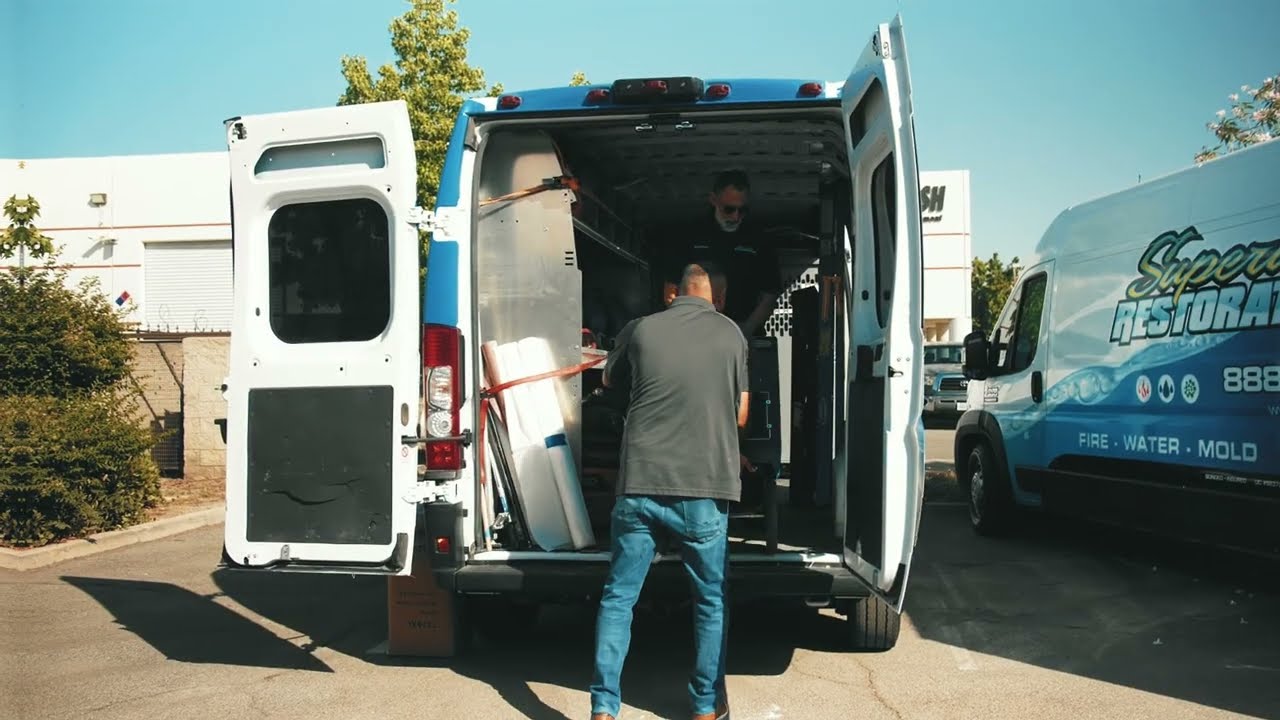
Most Irvine mold calls do not come from homes that flooded. They come from homes where a slow drip behind a Quail Hill bathroom vanity or a hairline crack in a Woodbridge shower pan fed a wall cavity for months. Superior Restoration provides IICRC S520 mold remediation throughout the City of Irvine from our Anaheim office at 1260 South Simpson Circle, roughly 16 miles north via Interstate 5 and SR-261. Our certified technicians reach Irvine assessments in 25 to 35 minutes with moisture mapping equipment, HEPA air scrubbers, containment systems, and full remediation tooling. We have been remediating mold across Orange County since 2010.
Why Irvine Properties Develop Mold More Often Than Homeowners Expect
Mold colonizes within 24 to 48 hours of water exposure. In Irvine that window is shaped by three city-specific conditions stacked together. Post-1971 slab-on-grade construction dominates the entire housing stock, which means moisture trapped at the slab-wall interface has almost nowhere to vent. High-density master-planned wall assemblies in the 1990s and 2000s villages create floor-ceiling and shared-wall pockets that hold moisture long after surfaces feel dry. And the Newport Coast marine layer reaches measurably inland to Quail Hill, the University of California Irvine campus, and the San Diego Creek and Peters Canyon Wash corridors during summer and early fall, elevating overnight humidity in a way most homeowners do not associate with Irvine. We follow IICRC S520, the professional standard for mold remediation, on every job.
Post-1971 Slab-on-Grade Construction
Almost no Irvine home has a raised foundation or crawlspace. The Irvine Company began master-planned village build-out in the early 1970s on slab-on-grade construction, and every village since has repeated that foundation type. Slab-on-grade construction has no air-circulating crawlspace beneath the living space. Moisture entering the wall assembly at the slab-wall interface, from a slow supply-line leak, a hairline foundation crack, or vapor migration through the slab itself, has no easy path out. It stays inside the wall cavity, feeding any organic material in contact with it. Paper-faced drywall is the preferred food source. The slow-leak failure mode is far more common in Irvine than the burst-pipe flood event most homeowners think of as mold’s origin. For active water events see our Irvine water damage restoration page.
High-Density Wall Assemblies in Master-Planned Villages
Northpark, Quail Hill, Turtle Ridge, Cypress Village, and Portola Springs were built at higher residential densities than the 1970s and 1980s tracts. Two-story floor plans dominate. Shared-wall townhomes are common. Floor-ceiling assemblies between stories contain framing, subfloor sheathing, insulation, HVAC ducts, and plumbing runs, and the trapped-moisture pocket between floors is one of the most consistent mold sources we find in this housing generation. Shared-wall scope in attached construction means mold in one unit can affect adjacent units before anyone in either home is aware of the problem.
Marine Layer Reach From Newport Coast Inland
Irvine is not on the coast, but the marine layer does not stop at the shoreline. During late spring through early fall, marine air pushes inland from Newport Coast through Crystal Cove and the San Joaquin Hills, reaching into Quail Hill, Turtle Ridge, the UC Irvine campus area, and along the San Diego Creek corridor toward central Irvine. Overnight relative humidity in these inland-coastal villages runs measurably higher than in western Irvine villages farther from the coast. Combined with summer daytime heat, the diurnal humidity swing creates condensation cycles inside wall assemblies and attic-mounted HVAC components. The marine influence is not extreme by Pacific Coast standards, but it is enough to extend the drying timeline on any water event and to keep wall cavities damp longer than homeowners expect.
Common Hidden Mold Locations in Irvine Homes
Two-Story Floor-Ceiling Assemblies in High-Density Villages
The floor-ceiling assembly in a two-story home contains framing lumber, subfloor sheathing, insulation, HVAC ducts, and sometimes plumbing runs. When a second-floor bathroom, laundry, or master suite leaks, water migrates downward through the floor assembly. The space between floors becomes a trapped moisture pocket that stays wet long after surfaces dry. Mold colonizes the organic materials, framing and paper-faced insulation, within 48 to 72 hours of sustained moisture contact. We see this pattern in Quail Hill, Northpark, Turtle Ridge, Cypress Village, and Portola Springs consistently.
Slab-Wall Interfaces in 1970s and 1980s Villages
Turtle Rock, University Park, Woodbridge, and Northwood have 40 to 55-year-old slab-on-grade foundations with original copper supply lines under the slab. Pinhole leaks at supply-line fittings, hairline cracks at the slab perimeter, and vapor migration through aging slab waterproofing all introduce moisture at the slab-wall interface. The first symptom is often a discolored baseboard or a musty smell along an interior wall. By the time the smell is noticeable, the wall cavity has been damp for weeks or months and mold colonies are established behind the drywall.
Attic-Mounted Air Handlers
Most Irvine villages use attic-mounted air handlers, particularly the 1990s and 2000s build-outs. Drain pan corrosion, clogged condensate lines, and attic temperatures pushing 130 degrees in summer create water in places homeowners never see. Original HVAC equipment from 2000-era Northpark and Quail Hill construction is now 20 to 25 years old. Worn seals, corroded drain pans, and degraded duct insulation create condensation pathways that feed mold above ceilings. The first symptom is usually a stain on a ceiling directly below the air handler, but by then the attic-side moisture has been active for some time.
Bathroom and Laundry-Adjacent Walls
Shower valve connections, toilet supply lines, and sink drain assemblies develop leaks over time. The wall cavity behind a bathroom is warm, dark, and gets just enough moisture from a slow leak to sustain mold growth. Paper-faced drywall is the preferred food source. We find mold behind bathroom walls in Irvine homes where the bathroom itself looks perfectly clean. In post-tension slab construction common across the 1980s villages, plumbing penetrations through the slab create additional moisture pathways that are not visible from inside the home.
Garage-Adjacent Walls
Water heaters in garages fail. When 40 to 80 gallons hit the garage floor, water wicks under the wall plate into adjacent living spaces. The garage side dries quickly because garage doors provide ventilation. The living space side stays wet because it is insulated and enclosed. Mold grows on the living space side while the garage looks completely dry. This is one of the most common mold sources we find across Northwood and Woodbridge.
Shared-Wall Assemblies in Attached Construction
Cypress Village, parts of Northpark, and the townhome and condo stock around University Town Center include attached construction with shared walls between units. A leak originating in one unit can saturate the shared-wall assembly and produce mold colonies on both sides of the wall before either occupant is aware of the problem. Assessment scope on these jobs includes the neighbor’s unit. Containment scope requires coordination with both owners and often with the HOA.
The Marine Layer Influence and Why It Matters for Mold in Eastern Inland-Coastal Irvine
Newport Coast sits roughly five to six miles south of central Irvine. The San Joaquin Hills rise between the coast and the city, but the marine layer routinely crests the hills and pushes inland during late spring through early fall. The reach extends through Quail Hill, Turtle Ridge, along the UC Irvine campus boundary, and up the San Diego Creek corridor. Properties within this inland-coastal band experience overnight relative humidity runs in the 80 to 95 percent range during marine layer events, even though daytime conditions feel dry. Air conditioning systems cycle harder, condensation forms on cold supply lines, and any small water intrusion has a longer drying time. The marine influence is not the cause of mold growth, but it consistently extends the window during which trapped moisture in a wall assembly remains a viable mold habitat. Standard remediation protocols apply across the city. They just have less margin in the inland-coastal villages.
Our Mold Remediation Process in Irvine
Call (951) 579-4096. Our Anaheim office at 1260 South Simpson Circle is roughly 16 miles from central Irvine, about 25 to 35 minutes south via Interstate 5 and SR-261. We respond 24/7. Every job follows IICRC S520 protocol.
Inspection and Moisture Mapping: Moisture meters and thermal imaging identify where water is present, not just where mold is visible. Finding and fixing the moisture source is step one. Without that, remediation is temporary.
Containment: We isolate the affected area with physical barriers and negative air pressure. HEPA filtration prevents mold spores from spreading to unaffected parts of the home during removal. Non-negotiable. Disturbing mold without containment makes the problem worse.
Removal of Affected Materials: Mold-contaminated drywall, insulation, and other porous materials are removed and disposed of properly. Non-porous surfaces like framing lumber can often be cleaned and treated rather than replaced, depending on extent of colonization.
HEPA Vacuuming and Antimicrobial Treatment: All surfaces within the containment zone are HEPA vacuumed and treated with antimicrobial agents. Air scrubbers run continuously until particulate counts return to normal.
Verification: Post-remediation moisture readings confirm the area is dry. If pre-remediation testing was performed by a third-party industrial hygienist, clearance testing verifies spore counts have returned to acceptable levels.
Reconstruction: New drywall, insulation, flooring, and paint restore the area to pre-loss condition. Our in-house team handles everything. For HOA-governed villages, we match approved finishes and trim profiles. See our damage reconstruction service page for the broader rebuild scope.
Post-Fire Mold Risk on East-Side Irvine Properties
Fire suppression by the Orange County Fire Authority introduces hundreds of gallons of water into the structure during a structural fire response. On ridgeline lots in Orchard Hills, Portola Springs, Turtle Ridge, and Quail Hill where Very High Fire Hazard Severity Zone exposure raises the wildfire response probability, post-suppression moisture in wall cavities and insulation creates a mold incubation environment within 48 hours. If the structure is not professionally dried during the same response window as soot remediation, mold will be a follow-on call within weeks. For more on the fire response and our coordinated approach to fire-and-mold scope on these properties, see our Irvine fire damage restoration page.
Why Irvine Homeowners Choose Superior Restoration for Mold Remediation
16 Years in Orange County. We have remediated mold across Irvine since 2010. Every village, every housing generation, every structural variation across the master-planned grid. We know the patterns this city produces.
IICRC S520 Certified. All technicians hold certifications from the Institute of Inspection, Cleaning and Restoration Certification. Mold has its own standard separate from water damage’s S500: different containment, different verification, different documentation. We follow S520 on every job.
Source Identification First. We do not just remove mold. We find and fix the moisture source feeding it. That is the difference between a remediation that lasts and one that comes back in six months.
HOA-Aware Reconstruction. Almost every Irvine village runs under HOA architectural standards. Tile profiles, stucco color, eave detailing. We carry the village’s approved palette into the rebuild plan from the first scoping call.
367 Google Reviews at 4.9 Average. Across our four offices. Reputation built job by job over 16 years.
Full Restoration Capability. Mold remediation often requires removing drywall, insulation, and flooring. We handle the rebuild too. CSLB License #983759 covers the full scope, so you do not need to coordinate between separate contractors.
Common Questions About Mold Remediation in Irvine
How fast does mold grow after a water event in Irvine?
Mold colonizes within 24 to 48 hours of water exposure. Irvine’s inland-coastal humidity, particularly in the villages within marine-layer reach, can extend the active growth window further. If you discover water damage that has been sitting for more than two days, mold testing should be part of the restoration process. The first 48 hours are when professional drying matters most.
Why is slab-on-grade construction relevant to mold in Irvine?
Almost every Irvine home was built after 1971 on slab-on-grade construction. There is no air-circulating crawlspace beneath the living space. Moisture entering the wall assembly at the slab-wall interface, from a slow supply-line leak or vapor migration through the slab, has no easy path out. It stays inside the wall cavity, feeding any organic material in contact with it. Slow-leak mold in slab-on-grade construction is the most common mold source pattern we find in Irvine.
Does the marine layer really reach Irvine villages?
Yes, particularly during late spring through early fall. Marine air pushes inland from Newport Coast over the San Joaquin Hills, reaching Quail Hill, Turtle Ridge, the UC Irvine campus area, and along the San Diego Creek corridor toward central Irvine. Overnight relative humidity in this inland-coastal band runs measurably higher than in western Irvine. The marine influence is not extreme, but it extends drying timelines on any water event and keeps wall cavities damp longer than homeowners expect.
Do I need pre-remediation mold testing?
Not always. If mold is visible and the affected area is under 10 square feet, testing before remediation is optional. For larger areas, insurance disputes, or real estate transactions, pre-remediation testing by a third-party industrial hygienist establishes baseline conditions, and post-remediation clearance testing verifies the work was effective. We can recommend qualified testing firms in Orange County.
How does containment during mold remediation work?
We isolate the affected area with physical plastic barriers floor to ceiling and create negative air pressure inside the containment using HEPA-filtered air scrubbers. This prevents mold spores from spreading to unaffected parts of the home during removal. Containment integrity is verified throughout the job. Disturbing mold without containment makes the problem significantly worse.
What about mold in townhomes and condos in Cypress Village or University Town Center?
Shared-wall construction means a leak in one unit can produce mold colonies on both sides of the shared-wall assembly. Assessment scope includes the neighbor’s unit and often the HOA-controlled common area. We coordinate with both owners and the HOA, document the source and the migration path, and run containment that protects both units during removal. We have worked attached-construction mold jobs across Irvine villages many times.
What symptoms suggest professional mold inspection is warranted?
A persistent musty smell that does not clear with cleaning, visible discoloration at baseboards or ceiling seams, allergy-type symptoms that improve when you leave the house, or any of these patterns appearing within six weeks of a known water event. These are decision-tree signals to call a professional inspection, not medical diagnostic claims. We assess and recommend testing if conditions warrant it.
Contact Superior Restoration for Mold Remediation in Irvine
When you suspect mold in your Irvine home or business, call our 24/7 line at (951) 579-4096 or contact us online.
Serving Irvine From Our Anaheim Office
Superior Restoration, 1260 South Simpson Circle, Anaheim, CA 92806
(951) 579-4096
CSLB License #983759 | IICRC Certified Firm | IICRC S520
Founded 2010 | Part of HighGround Restoration Group