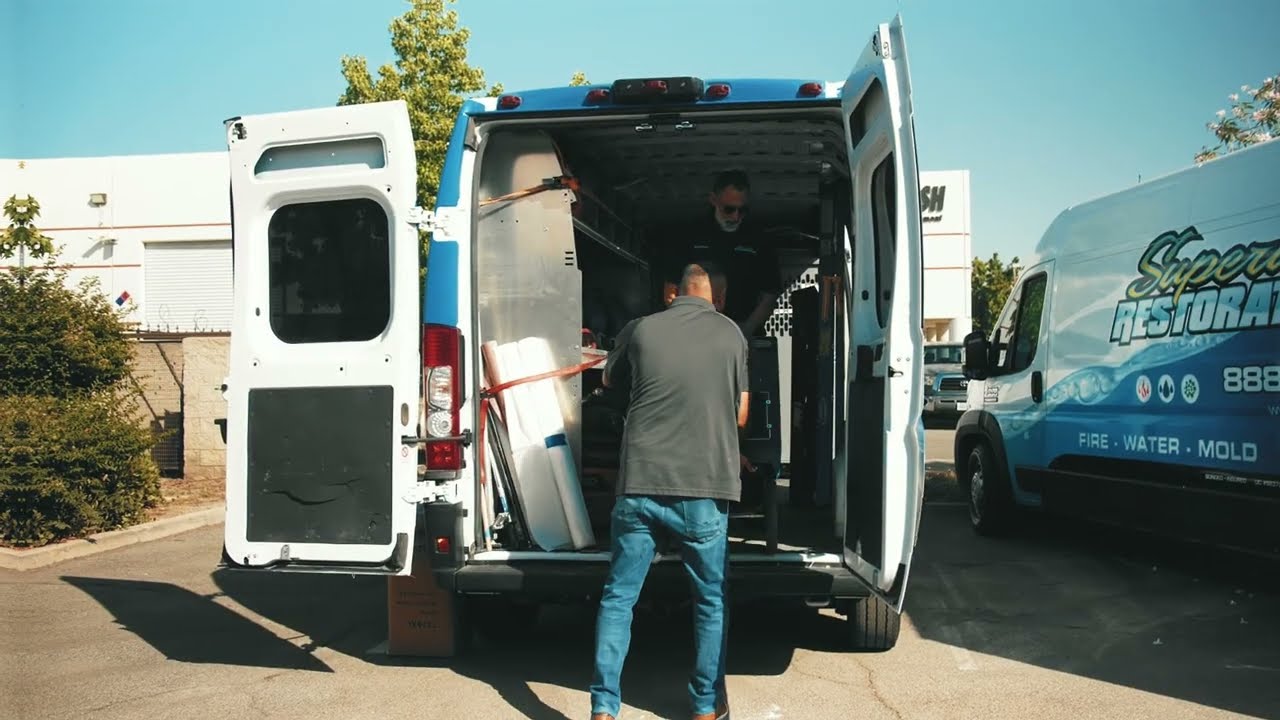





Water Damage Restoration in Laguna Hills, CA
24/7 Emergency Response: (951) 579-4096
Superior Restoration provides water damage restoration throughout the City of Laguna Hills from our Anaheim office at 1260 South Simpson Circle, about 26 miles north. Our IICRC-certified technicians reach Laguna Hills water emergencies in roughly 30 to 40 minutes with truck-mounted extractors, commercial air movers, and moisture-mapping equipment. We have been drying out and rebuilding water-damaged homes and businesses across Orange County since 2010. Laguna Hills is a South County suburb with a very specific water profile, because almost the entire city went up in one tight building window on one kind of foundation, and that shapes how water damage shows up here.
Why Water Damage in Laguna Hills Follows the Slab
Laguna Hills was carved out of the old Moulton Ranch, subdivided starting in the early 1960s, and built out through the 1970s and 1980s before the city formally incorporated in 1991. That timeline matters. Unlike Tustin or Santa Ana, where you find a century of construction stacked side by side, Laguna Hills is overwhelmingly tract housing from a 25-year stretch, and the great majority of it sits on concrete slab-on-grade foundations. When a city is built that uniformly, its water emergencies cluster around the failure modes that construction era is prone to, and in Laguna Hills the dominant one is the slab leak. The pipes that ran under those slabs in 1972 are now more than 50 years old, which is exactly the age where copper supply lines start to give out.
The Slab Leak: Laguna Hills’ Signature Water Emergency
Copper supply lines were routed inside or beneath the slab in most of these homes, and after five decades of South Orange County’s mineral-heavy water and slow soil movement, pinhole leaks open up. The early signs are quiet and easy to miss. A warm patch on a tile or laminate floor, a stretch of carpet that stays damp for no reason, a water bill that jumps thirty or forty dollars with no change in habits, the faint sound of water running when every fixture in the house is off. By the time water actually surfaces through the flooring, it has usually been saturating the sub-slab and wicking up into the bottom plates of walls for days. We locate the leak with thermal imaging and acoustic equipment, extract the trapped moisture, and dry the slab and surrounding framing before mold gets a foothold.
Aging Supply Lines and Water Heaters
The same age that drives slab leaks drives the rest of the list. Original galvanized fittings, fifty-year-old shutoff valves, and water heaters well past their service life all fail in homes that have not been fully re-plumbed. A water heater that lets go in a garage or interior closet can release forty or fifty gallons in minutes, and on the sloped lots common in Laguna Hills that water finds the low rooms fast. We see angle-stop failures under sinks, supply lines to toilets that crack at the connection, and washing machine hoses that burst, all of them ordinary parts that simply ran out of years.
Two-Story Tracts and Upstairs Failures
Plenty of the 1970s and 1980s housing here is two-story, and a second-floor failure behaves nothing like a ground-floor one. A burst supply line, an overflowing upstairs bathroom, or a failed shower pan sends water straight down through the floor assembly into the ceilings and rooms below, often spreading across a wide footprint before anyone notices. Catching these fast is the difference between drying a ceiling and replacing one.
Laguna Hills’ Watershed and Storm Runoff Picture
Laguna Hills sits in the Aliso Creek watershed, in the Saddleback Valley at roughly 364 feet of elevation, with Interstate 5 running along its eastern edge. Aliso Creek and its tributaries drain this part of South County, gathering runoff from the surrounding hills and carrying it southwest toward the coast at Aliso Beach. The creek itself is largely a managed channel through the developed areas, which means routine rainfall is handled without much drama. River-style flooding is not the city’s primary water threat.
The bigger storm risk in Laguna Hills is hillside runoff during intense rain. The city has real grade to it, with homes set on slopes, terraced lots, and streets that drain downhill toward the creek corridor. During a strong atmospheric river event, water moves off the hills faster than storm drains and surface streets can carry it, and it collects at the low points: downslope garages, homes at the bottom of a graded street, and properties where a hillside sheds directly toward the structure. Water pushes in through garage doors, thresholds, and foundation gaps, and on saturated slopes the added risk is soil movement that can crack a slab or shift a foundation. This kind of external surface flooding matters for coverage, because standard homeowner’s policies do not pay for it. That falls under FEMA flood insurance.
Common Water Damage Causes in Laguna Hills
Slab Leaks in 1960s Through 1980s Tracts
This is the heart of water damage in Laguna Hills. Aging copper under the concrete develops pinhole leaks that saturate the sub-slab quietly for days before any water reaches the surface. We use thermal imaging and moisture meters to pinpoint the source, extract the trapped water, and dry the slab and adjacent framing fully, because moisture left under a slab is exactly where hidden mold starts.
Water Heater and Supply Line Failures
In housing this age, water heaters past their service life, corroded angle stops, cracked toilet supply lines, and burst washing machine hoses are everyday failures. On the sloped lots common here, that water runs downhill inside the home and reaches the lowest rooms quickly, so fast extraction limits how far it travels.
Upstairs and Second-Floor Failures
In the two-story tracts, an upstairs bathroom overflow, a failed shower pan, or a burst supply line cascades down through the floor assembly into the ceilings and rooms below. These events spread across a wide area before they are noticed, which is why prompt drying of the full path matters, not just the obvious wet spot.
Hillside Storm Runoff and Soil Movement
During significant storms, runoff coming off the surrounding hills can overwhelm storm drains and pond against downslope homes and garages, entering through thresholds and foundation gaps. On saturated slopes, soil movement can also stress slabs and foundations. External flooding is not covered by standard homeowner’s policies, so we document the source and intrusion path carefully for whatever coverage applies.
Our Water Damage Restoration Process for Laguna Hills
Call (951) 579-4096. Our Anaheim office at 1260 South Simpson Circle is about 26 miles from Laguna Hills, roughly 30 to 40 minutes down the 5 depending on traffic. We respond 24/7, including weekends and holidays.
Assessment: Thermal imaging and moisture meters map the full scope of water intrusion. For suspected slab leaks, we use acoustic and thermal location to find the source under the concrete before any work begins. On sloped lots and downslope homes, we check how water traveled and whether it reached lower rooms or below-grade spaces.
Water Extraction: Truck-mounted extractors remove standing water. When water has run downhill through a home, we work the full path rather than only the room where it pooled.
Structural Drying: Commercial air movers and dehumidifiers bring materials back to target moisture levels, with daily monitoring at documented checkpoints. Sub-slab moisture and wet bottom plates from a slab leak dry slower than surface water, so we set the drying plan to the actual readings, not a stopwatch.
Cleaning and Sanitization: Sewage backups and storm runoff intrusion both require Category 3 protocols, which means full antimicrobial treatment and removal of contaminated porous materials.
Reconstruction: Drywall, flooring, cabinetry, and paint, handled by our in-house team so there is no gap between drying out the home and putting it back together.
Water Damage Restoration Cost in Laguna Hills, CA
Water restoration costs in Laguna Hills run in the moderate range for Orange County. A contained single-room slab leak or pipe burst typically runs $2,500 to $5,000. Multi-room events range from $6,000 to $15,000 depending on scope and how far the water traveled. Slab leaks that have saturated the sub-slab for an extended period, or two-story failures where water reached multiple floors, can run higher because the drying and repair scope is larger. Storm runoff events that bring soil and outdoor contaminants into the home also add Category 3 cleaning to the bill.
Insurance covers sudden and accidental damage: burst pipes, appliance failures, and water heater ruptures. It does not cover gradual leaks, deferred maintenance, or external storm flooding. We document everything with photographs, moisture readings, and thermal imaging, and we work directly with your adjuster so the claim reflects the full scope rather than only what is visible at the surface.
Why Laguna Hills Property Owners Choose Superior Restoration
We Know the Slab Leak Cold. Laguna Hills housing concentrates the exact failure that aging slab-on-grade tracts are prone to. Finding a slab leak fast, before it has wicked into walls and fed mold, is routine work for our crews, not a guessing game.
Dispatched From Our Anaheim Office. We run South County calls down the 5 from Anaheim and reach most Laguna Hills addresses in 30 to 40 minutes. Getting on site quickly means extracting water while it is still contained, not after it has spread through a floor assembly.
IICRC Certified. All technicians are certified to S500 water damage restoration standards, with Category 3 protocols for sewage and storm runoff events.
One License, Full Scope. CSLB License #983759 covers everything from emergency extraction through final paint. One company, one point of contact, no handoff between a restoration crew and a separate reconstruction contractor.
367 Google Reviews at 4.9 Average. Across our offices, a reputation built job by job since 2010.
Common Questions About Water Damage in Laguna Hills
How fast can you get to Laguna Hills?
Our Anaheim office is about 26 miles away. We reach most Laguna Hills addresses in 30 to 40 minutes down the 5 depending on traffic. We respond 24/7, including holidays.
I have a warm spot on my floor and a high water bill. Is that a slab leak?
Often, yes. In Laguna Hills’ 1960s through 1980s slab homes, a warm spot on the floor, unexplained damp carpet, a spike in the water bill, or the sound of running water with everything off are classic slab leak signs. The leak has usually been saturating the sub-slab for days before it surfaces, so it is worth getting located quickly.
My house is on a slope and water came in during a storm. Is that covered?
Generally no. Standard homeowner’s policies do not cover external surface flooding, including hillside runoff that ponds against a downslope home and pushes in through a garage or threshold. External flooding falls under FEMA flood insurance. We document the source and intrusion path carefully for whatever coverage does apply.
Water came down through my ceiling from the floor above. What now?
In a two-story home, an upstairs failure spreads through the floor assembly into the ceilings and rooms below, often across a wide area. We trace the full path, extract and dry everything the water reached rather than just the obvious wet spot, and document the scope for your claim. Speed matters here, because a saturated ceiling that is not dried promptly can fail.
How does my home’s age affect water damage risk in Laguna Hills?
Most Laguna Hills homes date from the 1960s through the 1980s, which puts their original copper supply lines, water heaters, and shutoff valves at or past the age where they start to fail. That is why slab leaks and supply line failures are the most common water emergencies here. If your home still has its original plumbing, those components are living on borrowed time.
Should I worry about mold after water damage in Laguna Hills?
Yes. Mold colonizes within 24 to 48 hours of water exposure, and South County’s mild year-round temperatures support growth in every season. Slab leaks are especially risky because the moisture sits hidden under the floor and inside wall bases, which is why professional drying with daily monitoring matters. For the deeper picture see our mold remediation service.
Contact Superior Restoration for Water Damage in Laguna Hills
When water damages your Laguna Hills home or business, call our 24/7 emergency line at (951) 579-4096 or contact us online.
Serving Laguna Hills From Our Anaheim Office
Superior Restoration, 1260 South Simpson Circle, Anaheim, CA 92806
(951) 579-4096
CSLB License #983759 | IICRC Certified Firm
Founded 2010 | Part of HighGround Restoration Group