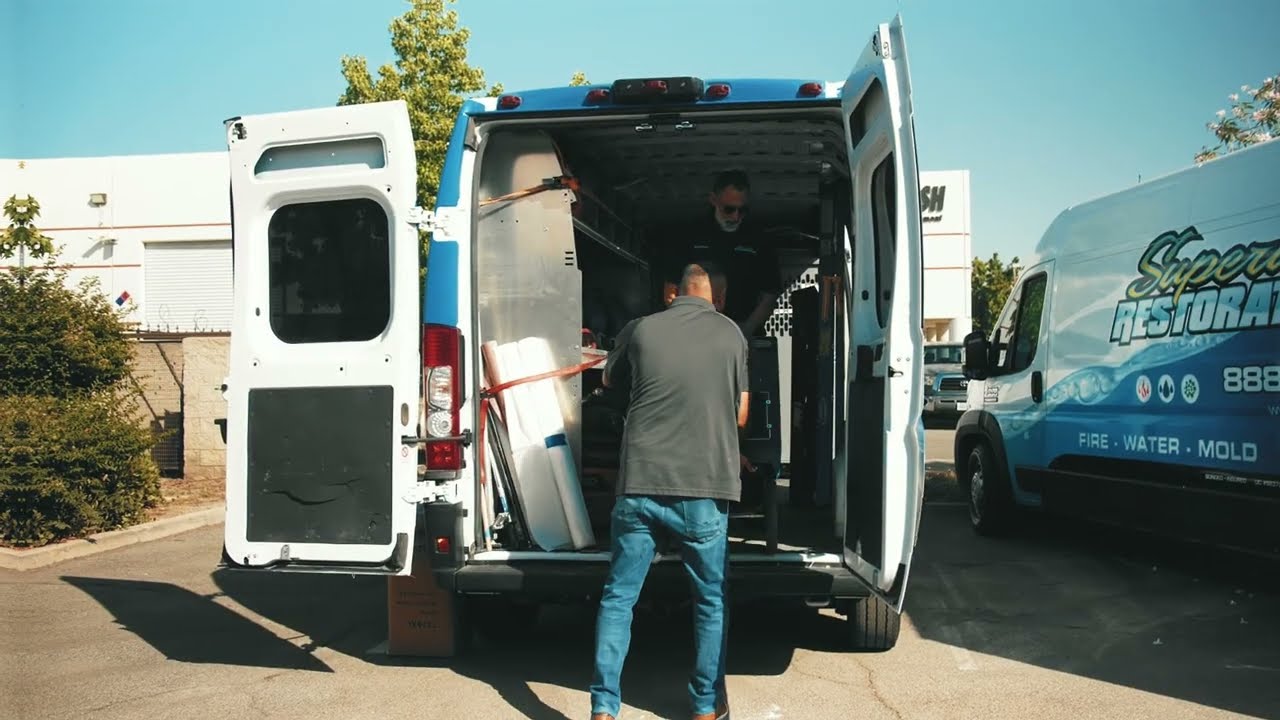





Water Damage Restoration in Mission Viejo, CA
24/7 Emergency Response: (951) 579-4096
Superior Restoration provides water damage restoration throughout the City of Mission Viejo from our Anaheim office at 1260 South Simpson Circle, about 28 miles north. Our IICRC-certified technicians reach Mission Viejo water emergencies in roughly 30 to 40 minutes with truck-mounted extractors, commercial air movers, and moisture-mapping equipment. We have been drying out and rebuilding water-damaged homes across Orange County since 2010. Mission Viejo is one of the more predictable cities we serve, and that is not a knock on it. It is a master-planned community where most of the housing went up inside three decades on the same kind of foundation, which means the water emergencies here cluster around a few specific failures we see again and again.
Why Water Damage in Mission Viejo Is a Slab Story
Mission Viejo was built by the Mission Viejo Company starting in the mid-1960s, one of the largest master-planned communities in the country, and the bulk of its housing went up through the 1970s, 1980s, and into the early 1990s. That timeline matters more than it sounds. It means most homes here sit on concrete slab-on-grade foundations, and most of them are now 30 to 60 years old. Slab-on-grade construction has no crawlspace under the floor for a plumber to trace a leak. The copper supply lines run inside or beneath the concrete, and when they fail, the water has nowhere to go but up through the slab into the rooms above. After half a century of Orange County’s mineral-heavy water, that failure is no longer rare. It is the signature water emergency of this city.
The Slab Leak: Mission Viejo’s Defining Water Emergency
A slab leak rarely announces itself. The copper line under the concrete develops a pinhole, and for days or weeks the water saturates the soil and sub-slab before anyone notices. The early signs are quiet ones: a warm spot on a tile floor where a hot-water line is leaking, a patch of carpet that stays damp no matter what, a water bill that jumps $30 or $40 with no change in habits, or the faint sound of running water when every fixture in the house is off. By the time water surfaces through the flooring, it has usually been wicking up into baseboards, drywall, and framing for a while. We locate the leak with thermal imaging and acoustic equipment, extract the trapped moisture, and dry the slab and surrounding materials before mold has a chance to colonize.
Aging Supply Lines and Water Heaters in 40-Year-Old Homes
The slab is not the only thing aging in a 1980s Mission Viejo tract home. Water heaters last 8 to 12 years, so a 40-year-old home has cycled through several, each a potential failure. Angle stops under sinks and toilets, the flexible supply lines feeding them, and the braided hoses behind washing machines all stiffen and crack with age. When one lets go in a single-story slab home, the water spreads fast across an open floor plan. In the two-story plans that fill many Mission Viejo neighborhoods, an upstairs bathroom or laundry failure cascades down through the floor assembly into the rooms below, doubling the affected area before anyone is home to shut the valve.
The HOA Layer That Other Cities Do Not Have
Mission Viejo is heavily governed by homeowners associations, and a good share of its housing is attached: condominiums, townhomes, and planned developments wrapped around the city’s parks and greenbelts. In attached housing, a water failure does not stay in one home. It crosses shared walls and floor assemblies into the neighboring unit, turning a single-home problem into a multi-party claim involving the HOA’s master policy, the unit owner’s HO-6 policy, and sometimes a downstairs neighbor’s carrier. We document where the water originated, how it traveled, and which units it reached, because that is exactly what the associations and adjusters need to sort out who pays for what.
Mission Viejo’s Watershed and Flood Picture
Mission Viejo drains primarily to the Oso Creek watershed. Oso Creek runs through the city and eventually joins Trabuco Creek before reaching San Juan Creek and the ocean at Doheny State Beach. Much of the creek through the developed parts of the city has been channelized for flood control, which is why creek overflow is not the everyday water threat here. The city also wraps around Lake Mission Viejo, a private 124-acre recreational reservoir built as the centerpiece amenity of the master plan, open to members of the lake association. The lake is managed, so it is not a flood source the way a natural river would be, but the homes along its shoreline and surrounding slopes carry their own drainage and grading considerations in heavy rain.
The bigger storm risk in Mission Viejo is local rather than riverine. The city sits on rolling terrain, and during an intense atmospheric river event, runoff moves downhill fast and collects at the low points: the bottoms of sloped streets, homes built into hillsides, and properties below grade relative to the road. Hillside lots can see water sheet down against a foundation or push through a garage at the low end of a driveway. Standard homeowner’s policies do not cover external surface flooding, which falls under FEMA flood insurance, so the source of the water matters a great deal for coverage, and we document it carefully.
Common Water Damage Causes in Mission Viejo
Slab Leaks in Aging Tract Homes
This is the heart of water damage in Mission Viejo. The 1970s and 1980s slab-on-grade tracts that make up most of the city are now decades into the life of their original copper plumbing. Pinhole leaks open under the concrete and saturate the sub-slab quietly for days before any water surfaces. We use thermal imaging, acoustic detection, and moisture meters to pinpoint the source, extract the trapped water, and dry the slab and adjacent framing completely, because moisture left under a slab is precisely where hidden mold begins.
Water Heater and Supply Line Failures
In a city of 40-plus-year-old homes, water heaters, angle stops, and flexible supply lines fail on schedule. A ruptured water heater can release 40 to 50 gallons at once and keep feeding the leak until the supply is shut off. A cracked braided washer hose does the same on a smaller scale. In single-story slab homes the water spreads across the floor, and in two-story plans it travels down through the ceiling below.
Multi-Unit and HOA Property Failures
Mission Viejo’s condominiums and attached townhomes share walls, ceilings, and floor assemblies, so a leak in one unit becomes a leak in two or three. Water from an upstairs unit comes through a downstairs ceiling, and the responsibility question pulls in the HOA master policy alongside individual owner policies. We deploy to all affected units, document the contamination in each, and coordinate the paperwork that the association and the carriers need.
Storm and Hillside Runoff
During significant storms, Mission Viejo’s sloped streets and hillside lots can see runoff collect at low points and push into garages and homes through thresholds, foundation gaps, and below-grade openings. This external flooding is separate from a burst pipe and is not covered by standard homeowner’s policies, so we document the source and intrusion path carefully for whatever coverage applies.
Our Water Damage Restoration Process for Mission Viejo
Call (951) 579-4096. Our Anaheim office at 1260 South Simpson Circle is about 28 miles from Mission Viejo, roughly 30 to 40 minutes depending on traffic on the 5 freeway. We respond 24/7, including weekends and holidays.
Assessment: Thermal imaging and moisture meters map the full scope of water intrusion. On suspected slab leaks, we use acoustic detection to pinpoint the source under the concrete before any work begins. In attached condos and townhomes, we assess adjacent and below units to find every affected space.
Water Extraction: Truck-mounted extractors remove standing water. For multi-unit events, we deploy equipment in all affected units at once to stop cross-contamination and shorten the overall timeline.
Structural Drying: Commercial air movers and dehumidifiers bring materials back to target moisture levels, with daily monitoring at documented checkpoints. Water that has wicked up from a slab into baseboards, drywall, and framing dries slower than surface water, so we set the drying plan to what the moisture readings show, not a fixed schedule.
Cleaning and Sanitization: Sewage backups and prolonged contamination require Category 3 protocols, which means full antimicrobial treatment and removal of contaminated porous materials.
Reconstruction: Drywall, flooring, baseboards, cabinetry, and paint, handled by our in-house team. For HOA-governed properties, we work to the association’s material and finish standards where they apply.
Water Damage Restoration Cost in Mission Viejo, CA
Water restoration costs in Mission Viejo run in the moderate range for Orange County. A contained single-room slab leak or pipe burst typically runs $2,500 to $5,000, drying and localized repair included. Multi-room events range from $6,000 to $15,000 depending on scope and how far the water traveled, and a slab leak that saturated sub-slab and walls for weeks before discovery falls toward the higher end. Multi-unit condominium and townhome events, where several units are affected and multiple policies are involved, can exceed $20,000 across the combined scope.
Insurance covers sudden and accidental damage: burst pipes, water heater ruptures, and appliance failures. It does not cover gradual leaks, deferred maintenance, or external storm flooding. Slab leaks sit in a gray area, since the leak itself may be excluded as a gradual failure while the resulting water damage to floors and walls is often covered, so the documentation matters. We photograph everything, record moisture readings and thermal images, and work directly with your adjuster so the claim reflects the full scope rather than only what is visible at the surface.
Why Mission Viejo Property Owners Choose Superior Restoration
We Know Slab Construction. Most of Mission Viejo sits on slab-on-grade, and the slab leak is the emergency we respond to here more than any other. We locate it, extract the trapped moisture, and dry the slab properly rather than just mopping the surface and calling it done.
HOA and Multi-Unit Experience. Attached housing and association-governed properties make up a large share of Mission Viejo, and the claims are the most complex to coordinate. We manage the documentation across unit owners, HOA master policies, and multiple carriers routinely.
IICRC Certified. All technicians are certified to S500 water damage restoration standards, with Category 3 protocols for sewage and floodwater events.
One License, Full Scope. CSLB License #983759 covers everything from emergency extraction through final paint. One company, one point of contact, no handoff between a restoration crew and a separate reconstruction contractor.
367 Google Reviews at 4.9 Average. Across our offices, a reputation built job by job since 2010.
Common Questions About Water Damage in Mission Viejo
How fast can you get to Mission Viejo?
Our Anaheim office is about 28 miles away. We reach most Mission Viejo addresses in 30 to 40 minutes depending on freeway traffic. We respond 24/7, including holidays.
I have a warm spot on my floor and a high water bill. Is that a slab leak?
Often, yes. In Mission Viejo’s slab-on-grade homes, a warm spot on the floor, unexplained damp carpet, a spike in the water bill, or the sound of running water with everything off are classic slab leak signs. The leak has usually been saturating the sub-slab for days before it surfaces, so it is worth getting located quickly before the water reaches walls and framing.
My home is on a slab. How do you even dry that?
We first locate the leak with acoustic and thermal equipment so the repair is targeted rather than tearing up the whole floor. Once the source is fixed, we extract the trapped water and use air movers and dehumidifiers to dry the slab and any baseboards, drywall, and framing the moisture reached. We monitor moisture levels daily until readings confirm the materials are back to normal.
Water came through my ceiling from the condo upstairs. Who pays?
Responsibility depends on the cause, your HOA documents, and the building’s insurance structure, which usually involves the association’s master policy and the individual unit owners’ policies. We document where the water originated, how it traveled, and which units are affected, which is the documentation adjusters and property managers need to sort out responsibility. We work with all parties involved.
Does insurance cover flooding from a storm or hillside runoff?
Generally no. Standard homeowner’s policies do not cover external surface flooding or runoff that enters from outside the home. Some policies add a sewer and drain backup endorsement for an extra premium, and external flooding requires FEMA flood insurance. We document the source and intrusion path for whatever coverage applies.
Should I worry about mold after water damage in Mission Viejo?
Yes. Mold colonizes within 24 to 48 hours of water exposure, and Southern California’s mild year-round temperatures support growth in every season. Slab leaks are especially prone to hidden mold because the moisture sits under the floor and inside walls where it is not visible, which is why professional drying with daily monitoring matters. For the deeper picture see our mold remediation service.
Contact Superior Restoration for Water Damage in Mission Viejo
When water damages your Mission Viejo home or business, call our 24/7 emergency line at (951) 579-4096 or contact us online.
Serving Mission Viejo From Our Anaheim Office
Superior Restoration, 1260 South Simpson Circle, Anaheim, CA 92806
(951) 579-4096
CSLB License #983759 | IICRC Certified Firm
Founded 2010 | Part of HighGround Restoration Group