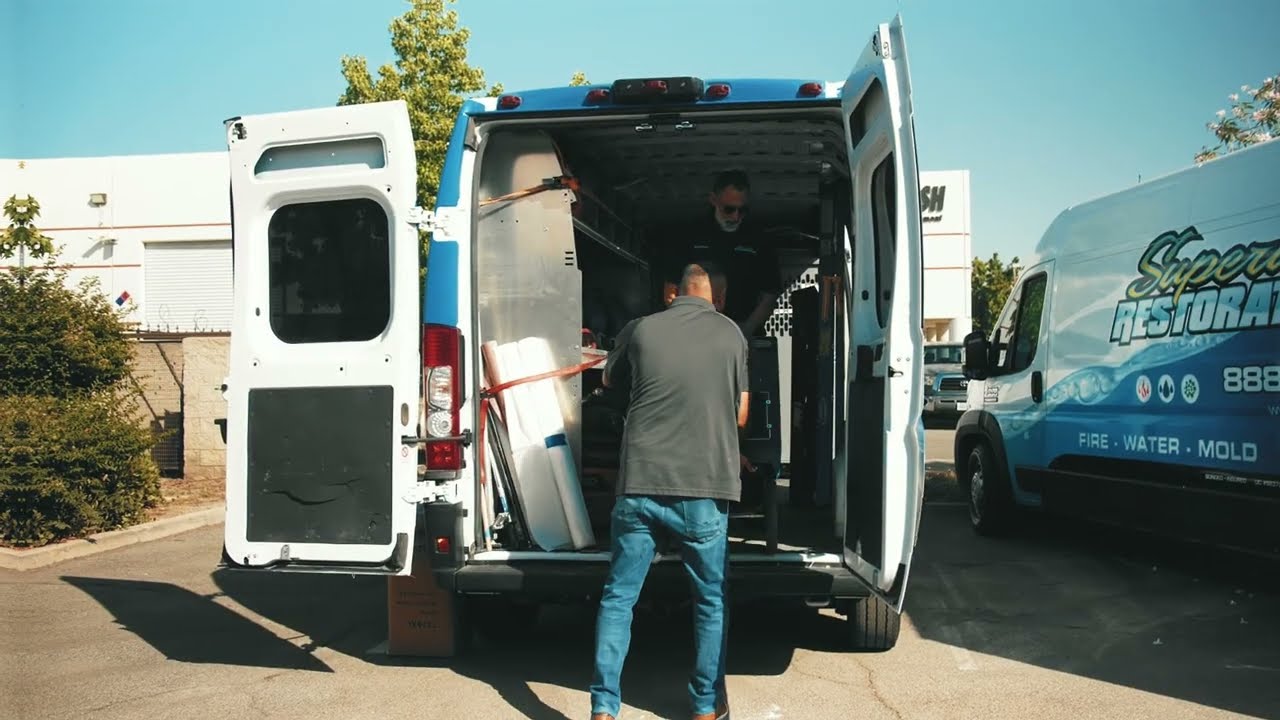





Water Damage Restoration in Orange, CA
24/7 Emergency Response: (951) 579-4096
Superior Restoration provides water damage restoration throughout the City of Orange from our Anaheim office at 1260 South Simpson Circle, about 6 miles northwest. Our IICRC-certified technicians reach Orange water emergencies in roughly 12 to 20 minutes with truck-mounted extractors, commercial air movers, and moisture-mapping equipment. We have been drying out and rebuilding water-damaged homes and businesses across Orange County since 2010. Orange is one of the more distinctive cities we serve, because it holds the largest concentration of pre-1920 housing in the county right next to tracts barely a generation old, and water damage behaves very differently across that range.
Why Water Damage in Orange Depends on the Age of the House
Orange is built in layers, and each layer fails its own way. At the center sits Old Towne, a one-square-mile historic district of Victorian, Craftsman, and bungalow homes from the 1880s through the 1920s, planned around the traffic-circle Plaza that earned the city its Plaza City nickname. Spreading out from there are the postwar tracts of the 1950s and 1960s, then the El Modena and east-Orange neighborhoods that filled in through the 1970s and 1980s, and finally the newer hillside developments toward Orange Park Acres and the Santiago Hills. A pipe failure in an 1895 Plaza-district home is a different job from the same failure in a 1985 hillside house, so the first thing we do on an Orange call is figure out which generation of construction we are walking into.
Old Towne: Redwood, Plaster, and Century-Old Plumbing
Old Towne Orange is the historic heart of the city and the largest National Register district in California, roughly one square mile of homes built between the 1880s and the 1920s around the Plaza. These houses were framed in old-growth redwood and finished in lath and plaster, and many still carry galvanized steel supply lines that corrode shut from the inside and cast iron drains that crack with age. When a line lets go behind a plaster wall, the water saturates lath, framing, and original wood floors that cannot simply be replaced. Plaster holds moisture far longer than drywall and feeds hidden mold, and historic-district guidelines limit what you can demolish. Drying these homes is slower, more careful work than the square footage suggests.
The 1950s and 1960s Tracts: Slab Leaks
The neighborhoods that grew out from Old Towne after the war, much of central and southern Orange, are dominated by 1950s and 1960s ranch homes, almost all on concrete slab-on-grade foundations. That construction is where Orange’s most common water emergency lives: the slab leak. Copper supply lines run inside or beneath the slab, and after 55 to 70 years of Orange County’s mineral-heavy water and decades of small soil movement, pinhole leaks open up. The early signs are quiet. A warm spot on a tile floor, a section of carpet that stays damp, a water bill that climbs $30 or $40 with no explanation, the sound of running water when every fixture is off. By the time water surfaces through the flooring, it has usually been saturating the sub-slab and wicking into walls for days. We locate the leak, extract the trapped moisture, and dry the slab and surrounding framing before mold takes hold.
East Orange and the Hillside Tracts: Newer Homes, Different Failures
El Modena, the neighborhoods east toward the foothills, and the hillside developments around Orange Park Acres and Santiago Hills represent the city’s later construction, much of it from the 1970s through the 2000s. Newer does not mean immune. These homes lean on plastic supply lines, braided appliance hoses, and water-using appliances on upper floors, exactly the failure points that flood a two-story home fast. A burst washing machine hose, a failed water heater, or a cracked refrigerator line can send hundreds of gallons through a floor assembly into the rooms below before anyone is home. On the sloped hillside lots, the added concern is drainage: a leak on an upper level can travel through the framing in ways that are not obvious from where it started.
Orange’s Watershed and Flood Picture
Orange is one of the Orange County cities that sits on a real natural waterway. Santiago Creek runs straight through the city, from the Santa Ana Mountains down to its confluence with the Santa Ana River near the Orange and Santa Ana border. It is the largest tributary entering the Santa Ana River below Prado Dam, with a watershed covering roughly 100 square miles. Villa Park Dam sits upstream on the creek, and the El Modena-Irvine Channel carries additional drainage through the eastern part of the city. Unlike the fully channelized inland cities, Orange has both a working creek and the storm-channel network feeding it.
That matters because flooding here has real history. Major Santa Ana River and Santiago Creek flood events are documented back to 1897, and the catastrophic floods of 1938 and 1969 drove the dam and channel system that protects the area today. That system handles ordinary rainfall well, so river flooding is not the everyday threat it once was. The bigger present-day risk during a heavy storm is local: county flood maps flag the areas adjacent to Santiago Creek Channel and the El Modena-Irvine Channel, and storm drains on the older flat streets near Old Towne can back up when an atmospheric river drops more water than the system can move at once. Then water ponds at low points, pushes against garage doors, and enters homes through thresholds and foundation gaps. External storm flooding is a separate problem from a burst pipe, and it matters for coverage: standard homeowner’s policies do not pay for surface flooding, which falls under FEMA flood insurance.
Common Water Damage Causes in Orange
Slab Leaks in Postwar Homes
The 1950s and 1960s slab-on-grade tracts across central and southern Orange are the city’s slab leak heartland. Aging copper under the concrete develops pinhole leaks that saturate the sub-slab quietly for days before any water shows on the surface. We use thermal imaging and moisture meters to find the source, extract the trapped water, and dry the slab and adjacent framing thoroughly, because moisture left under a slab is exactly where hidden mold starts.
Galvanized and Cast Iron Failures in Old Towne
Old Towne’s Victorian, Craftsman, and bungalow homes with original galvanized supply lines and cast iron drains are living on borrowed time. Galvanized steel corrodes inward until a joint breaches at full municipal pressure, and cast iron drains crack with age. In a 100-year-old Plaza-district home, that water reaches redwood framing, lath-and-plaster walls, and original wood floors that have to be dried and preserved rather than ripped out. We have responded to historic-district homes where a single failed line behind a wall soaked multiple rooms before the homeowner found the shutoff.
Appliance and Supply Line Failures in Newer Homes
In El Modena, the east-Orange tracts, and the hillside developments, the usual culprits are braided washing machine hoses, water heater ruptures, refrigerator and dishwasher supply lines, and upstairs bathroom failures. A second-floor failure cascades into the floor below through the floor assembly, and on a sloped hillside lot the water can travel further than expected through the framing. These events flood fast and reach far, so quick extraction matters.
Storm Flooding Near Santiago Creek and the Channels
During significant storms, the areas adjacent to Santiago Creek Channel and the El Modena-Irvine Channel, along with the older flat streets near Old Towne where storm drains cannot keep up with peak runoff, can see street flooding. Water enters through garage doors, thresholds, and foundation gaps. External flooding is not covered by standard homeowner’s policies, so we document the source and intrusion path carefully for whatever coverage applies.
Our Water Damage Restoration Process for Orange
Call (951) 579-4096. Our Anaheim office at 1260 South Simpson Circle is about 6 miles from Orange, roughly 12 to 20 minutes depending on the 57 and 22 freeway traffic. We respond 24/7, including weekends and holidays.
Assessment: Thermal imaging and moisture meters map the full scope of water intrusion. In Old Towne homes, we check for the realities of century-old construction, knob-and-tube remnants and lead paint, before any demolition. On hillside and multi-level homes, we trace where water has traveled through the framing rather than treating only the room where it surfaced.
Water Extraction: Truck-mounted extractors remove standing water. When water has moved across multiple levels or rooms, we deploy equipment throughout the affected area at once to stop further migration and shorten the overall timeline.
Structural Drying: Commercial air movers and dehumidifiers bring materials back to target moisture levels, with daily monitoring at documented checkpoints. Historic redwood and plaster dry slower than modern materials, so we set the drying plan to the building, not a stopwatch.
Cleaning and Sanitization: Sewage backups from aging cast iron drains and storm flooding both require Category 3 protocols, which means full antimicrobial treatment and removal of contaminated porous materials.
Reconstruction: Drywall, flooring, cabinetry, and paint, handled by our in-house team. For Old Towne properties, we work with period-appropriate materials when preservation guidelines require them.
Water Damage Restoration Cost in Orange, CA
Water restoration costs in Orange run in the moderate-to-higher range for Orange County, partly because of the city’s older housing. A contained single-room slab leak or pipe burst typically runs $2,500 to $5,000. Multi-room events range from $6,000 to $15,000 depending on scope and how far the water traveled. Old Towne historic homes can run higher when redwood framing, plaster, and original floors need careful drying and period-appropriate repair, and larger storm or multi-level events can exceed $20,000 across the combined scope.
Insurance covers sudden and accidental damage: burst pipes, appliance failures, and water heater ruptures. It does not cover gradual leaks, deferred maintenance, or external storm flooding. We document everything with photographs, moisture readings, and thermal imaging, and we work directly with your adjuster so the claim reflects the full scope rather than only what is visible at the surface.
Why Orange Property Owners Choose Superior Restoration
Dispatched From Our Anaheim Office. Orange is a short run from our Anaheim location. Arriving in 12 to 20 minutes means we are extracting water while it is still spreading, not after it has wicked into every wall and saturated the slab.
We Read the Building Before We Touch It. An 1895 Old Towne bungalow, a 1958 slab ranch, and a 1990 hillside home need three different drying approaches. We match the work to the construction, which protects historic materials and keeps newer homes from being over-demolished.
IICRC Certified. All technicians are certified to S500 water damage restoration standards, with Category 3 protocols for sewage and floodwater events.
One License, Full Scope. CSLB License #983759 covers everything from emergency extraction through final paint. One company, one point of contact, no handoff between a restoration crew and a separate reconstruction contractor.
367 Google Reviews at 4.9 Average. Across our offices, a reputation built job by job since 2010.
Common Questions About Water Damage in Orange
How fast can you get to Orange?
Our Anaheim office is about 6 miles away. We reach most Orange addresses in 12 to 20 minutes depending on freeway traffic. We respond 24/7, including holidays.
My Old Towne home has original plumbing. What should I watch for?
Galvanized supply lines from the early 1900s corrode from the inside, and cast iron drains crack with age. Warning signs include reduced water pressure, rust-colored water when a faucet first turns on, and visible corrosion at exposed fittings. In a historic Plaza-district home those failures hit redwood framing and plaster, so a plumbing inspection is urgent rather than optional once you see the signs.
I have a warm spot on my tile floor and a high water bill. Is that a slab leak?
Often, yes. In Orange’s 1950s and 1960s slab homes, a warm spot on the floor, unexplained damp carpet, a spike in the water bill, or the sound of running water with everything off are classic slab leak signs. The leak has usually been saturating the sub-slab for days before it surfaces, so it is worth getting located quickly.
My home is near Santiago Creek. Should I worry about flooding?
The dam and channel system built after the 1938 and 1969 floods handles ordinary rainfall well, so creek flooding is not the everyday threat it once was. During severe storms, the areas adjacent to Santiago Creek Channel and the El Modena-Irvine Channel are the spots county flood maps flag, and external surface flooding is not covered by standard homeowner’s policies. That coverage requires FEMA flood insurance, so it is worth knowing your flood zone.
Does insurance cover flooding from a storm or backed-up drains?
Generally no. Standard homeowner’s policies do not cover external surface flooding or storm drain backup. Some policies add a sewer and drain backup endorsement for an extra premium, and external flooding requires FEMA flood insurance. We document the source and intrusion path for whatever coverage applies.
Should I worry about mold after water damage in Orange?
Yes. Mold colonizes within 24 to 48 hours of water exposure, and Orange’s mild year-round temperatures support growth in every season. Old Towne’s plaster walls hide moisture longer and create ideal conditions for hidden mold, which is why professional drying with daily monitoring matters. For the deeper picture see our mold remediation service.
Contact Superior Restoration for Water Damage in Orange
When water damages your Orange home or business, call our 24/7 emergency line at (951) 579-4096 or contact us online.
Serving Orange From Our Anaheim Office
Superior Restoration, 1260 South Simpson Circle, Anaheim, CA 92806
(951) 579-4096
CSLB License #983759 | IICRC Certified Firm
Founded 2010 | Part of HighGround Restoration Group