




Mold Remediation in Riverside, CA
24/7 Emergency Response: (951) 579-4096
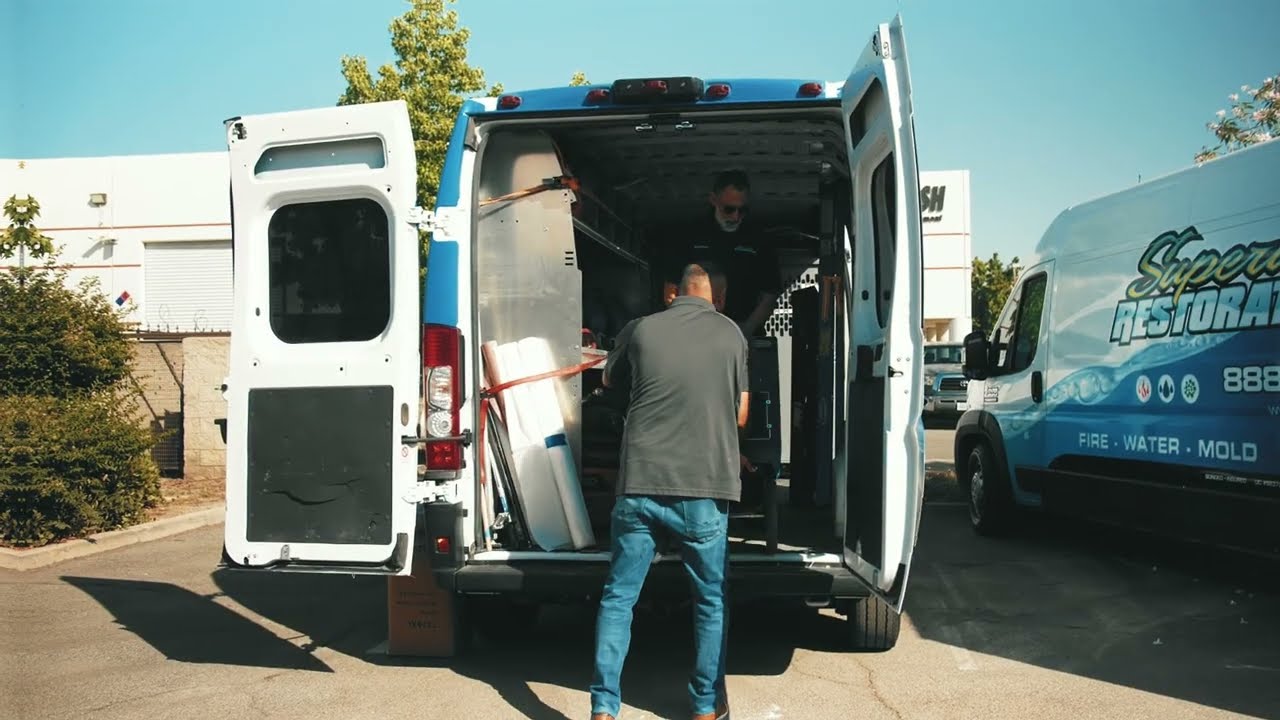
Most Riverside mold calls do not come from the homes that flooded. They come from the homes that thought they cleaned up the slow leak six months ago. Superior Restoration provides IICRC S520 mold remediation throughout the City of Riverside from our Lake Elsinore HQ at 532 3rd Street, roughly 22 miles south via I-15 and SR-74. Our certified technicians reach Riverside assessments in 35 to 45 minutes with moisture mapping equipment, HEPA air scrubbers, containment systems, and full remediation tooling. We have been remediating mold across Riverside County since Skylar Lewis founded the company in 2010.
Why Riverside Properties Develop Mold More Often Than Homeowners Expect
Mold colonizes within 24 to 48 hours of water exposure, and Riverside’s summer temperatures regularly above 95 degrees actually accelerate that timeline once moisture is trapped inside an envelope. The problem in Riverside is rarely the visible kind. It lives in pre-1920 plaster-and-lath wall cavities in the Wood Streets and Mile Square, cast iron drain corrosion behind 1950s and 1960s Arlington and La Sierra bathrooms, slab-construction moisture pockets in Orangecrest and Mission Grove, and the multi-unit shared envelopes near UC Riverside where one tenant’s slow leak feeds a colony in the adjacent unit. All of it driven by water that arrived weeks or months before anyone noticed. We follow IICRC S520, the professional standard for mold remediation, on every job.
Santa Ana River Corridor Humidity
Riverside is not a humid city by annual rainfall measure. The city averages around 10 to 11 inches per year. But properties within the Santa Ana River corridor (Rubidoux, parts of La Sierra and Arlanza, the Fairmount Park area, Riverview Drive in low-lying Rubidoux) experience measurably higher overnight humidity than properties on higher ground. Combined with summer daytime highs in the high 90s and low 100s, the diurnal humidity swing creates condensation cycles inside vented crawlspaces, attic assemblies, and slab-perimeter wall cavities. The flooding angle from the river is covered on our Riverside water damage restoration page. The mold-relevant signal here is ambient humidity, not surface flooding.
Pre-1920 Plaster-and-Lath Wall Cavities
The Mission Inn Historic District, Mile Square, and the Wood Streets carry homes built between 1880 and 1920 on raised foundations with plaster-and-lath walls. Lath gaps. Horsehair plaster. Original galvanized supply lines and cast iron drains running through wall cavities that were never designed for modern moisture-management standards. When a supply line weeps a few drops a day or a drain joint develops a pinhole, water lands in plaster and lath that hold moisture longer than gypsum board ever could. Colonies grow on the lath itself, on the back of the plaster, on the framing behind. By the time discoloration shows up on the front face of a wall, the cavity behind is often weeks into colonization. Gypsum board you can cut out and replace. Plaster-and-lath you have to handle differently.
1950s and 1960s Cast Iron Drain Corrosion
Arlington, La Sierra, Magnolia Center, and Ramona were built primarily between 1950 and 1975 with cast iron drain stacks and supply lines that have now been corroding for 60 to 75 years. Western Municipal Water District water in Arlington and La Sierra, and Riverside Public Utilities water in the central neighborhoods, both run at 200 to 300 parts per million hardness. That mineral content has been working on these pipes for decades. Cast iron drains corrode from the inside, and the symptom is rarely a dramatic burst. It is a slow weep at a pipe joint, a hairline crack in a fitting, a corroded section that leaks a few ounces a day into a stud bay. Those few ounces feed mold for months before anyone smells anything in the living space.
Slab-Construction Moisture Dynamics in Newer Master-Planned Areas
Orangecrest, Mission Grove, Canyon Crest, and Woodcrest carry post-2000 stucco-on-slab construction on post-tensioned concrete slabs. Almost no crawlspace. That sounds like a mold advantage and partly is, but the failure mode shifts to slab leaks and exterior-wall moisture wicking. Pinhole leaks in copper supply lines beneath the slab. Hairline cracks where stucco meets slab perimeter. Improper grading driving runoff toward foundation rather than away from it. All of these introduce moisture into the bottom plate of exterior framing, where it sits trapped between the slab and the wall insulation. Colonies grow on the bottom plate, the lower studs, and the back side of drywall while the visible wall looks pristine.
Common Hidden Mold Locations in Riverside Homes
Plaster-and-Lath Wall Cavities in Historic Stock
The Wood Streets, Mile Square, and Seventh Street historic areas carry homes with plaster-and-lath walls over original wood lath strips nailed to dense Douglas fir framing. Moisture in these cavities sits longer than in modern construction because plaster holds water, lath gaps trap air at high humidity, and there is no vapor barrier. We see colonies growing on the back side of plaster, on the lath itself, and on the front face of framing whenever a supply line, a drain joint, or a roof flashing has been weeping unnoticed.
Cast Iron Drain Joints in 1950s and 1960s Construction
The drain stack from a second-floor bathroom or laundry running down through a first-floor wall to a slab-level cleanout has 4 to 7 joints in a typical two-story Arlington or La Sierra home. Every joint is a potential weep point after 60+ years. The dampness shows up at the lowest point first, usually at the floor-wall joint of the first-floor room directly below or beside the drain run. Baseboard discoloration. Musty smell that intensifies after running water upstairs. We find colonies on the back of drywall and on framing inside the stud bay.
Slab-Perimeter Wall Cavities in Master-Planned Stock
Orangecrest, Mission Grove, Woodcrest. Twenty-five-year-old stucco-on-slab construction now in its mold-failure window. Hairline cracks at stucco-to-slab transitions, undersized weep screeds, and grading that pushes runoff toward the foundation create moisture pathways into the bottom plate. Colonies grow on framing and the back of drywall behind kitchens, garages, and exterior-facing bedrooms. The living-space surface is clean. The cavity is not.
Multi-Unit Shared Envelopes Near UC Riverside
The University Avenue corridor, Iowa Avenue, and Canyon Crest carry high-density apartments, duplexes, and converted single-family rentals. A slow leak in one unit migrates through shared walls and shared attic spaces into adjacent units. Tenant A reports musty smell. Tenant B never had a water event. Source is in Tenant C’s bathroom that has been weeping for months. Documenting the source pathway across unit boundaries is the only way these claims get resolved cleanly.
Attic-Mounted Air Handlers in 1990s and 2000s Construction
Many Riverside tracts from the 1990s and 2000s use attic-mounted air handlers. Drain pan corrosion plus clogged condensate lines plus 110-plus degree attic temperatures in summer produces standing water in places homeowners never see. Original HVAC equipment from 1995-era construction is now 30 years old. Worn seals, corroded drain pans, and degraded duct insulation create condensation pathways that feed mold above ceilings. Discoloration shows up on the ceiling around supply registers, usually long after the colony has been growing in the insulation above.
Bathroom and Laundry-Adjacent Walls
Shower valve connections, toilet supply lines, and sink drain assemblies develop leaks over time across every Riverside housing era. Wall cavity behind a bathroom is warm, dark, and gets just enough moisture from a slow weep to sustain colonies. Paper-faced drywall is the preferred food source. We find mold behind bathroom walls in Riverside homes where the bathroom itself looks perfectly clean.
Why the Three Construction Eras in Riverside Each Need a Different Approach
A Wood Streets 1915 Craftsman, an Arlington 1962 ranch, and an Orangecrest 2005 stucco-on-slab two-story are not the same building. They are three different moisture-management systems, each with its own failure pattern. Plaster-and-lath holds moisture in ways gypsum does not. Cast iron drains weep at different points than copper or PEX. Slab-construction failures hide in places raised-foundation failures never produce. Standard tract-home mold remediation protocol does not cover the historic-stock plaster cavities. Standard historic-stock approaches miss the slab-perimeter wicking. We assess each Riverside property against its specific construction era and adjust scope accordingly. Same IICRC S520 standard, different execution.
Our Mold Remediation Process in Riverside
Call (951) 579-4096. Our Lake Elsinore HQ at 532 3rd Street is roughly 22 miles south of central Riverside via I-15 and SR-74. Drive time runs 35 to 45 minutes depending on traffic. We respond 24/7. Every job follows IICRC S520 protocol.
Inspection and Moisture Mapping: Moisture meters and thermal imaging identify where water is present, not just where mold is visible. Finding and fixing the moisture source is step one. Without that, remediation is temporary.
Containment: We isolate the affected area with physical barriers and negative air pressure. HEPA filtration prevents mold spores from spreading to unaffected parts of the home during removal. Non-negotiable. Disturbing mold without containment makes the problem worse.
Removal of Affected Materials: Mold-contaminated drywall, insulation, and other porous materials are removed and disposed of properly. Non-porous surfaces like framing lumber can often be cleaned and treated rather than replaced, depending on extent of colonization. For plaster-and-lath in historic stock, we document existing conditions and coordinate replacement with City of Riverside Cultural Heritage Board review where preservation overlays apply.
HEPA Vacuuming and Antimicrobial Treatment: All surfaces within the containment zone are HEPA vacuumed and treated with antimicrobial agents. Air scrubbers run continuously until particulate counts return to normal.
Verification: Post-remediation moisture readings confirm the area is dry. If pre-remediation testing was performed by a third-party industrial hygienist, clearance testing verifies spore counts have returned to acceptable levels.
Reconstruction: New drywall, insulation, flooring, and paint restore the area to pre-loss condition. Our in-house team handles everything. For larger reconstruction scope, see our damage reconstruction service. For mold that follows a fire or post-fire suppression water event, see our Riverside fire damage restoration page, since smoke-and-moisture combinations require sequenced treatment.
Why Riverside Homeowners Choose Superior Restoration for Mold Remediation
16 Years in the County of Riverside: We have remediated mold across Riverside since 2010. Every neighborhood, every housing era, every structural variation from Wood Streets plaster-and-lath to Orangecrest stucco-on-slab. We know the patterns this city produces.
IICRC S520 Certified: All technicians hold certifications from the Institute of Inspection, Cleaning and Restoration Certification. Mold has its own standard separate from water damage’s S500. Different containment, different verification, different documentation. We follow S520 on every job.
Source Identification First: We do not just remove mold. We find and fix the moisture source feeding it. That is the difference between a remediation that lasts and one that comes back in six months.
367 Google Reviews, 4.9-Star Average: Across our four offices in the Inland Empire and Orange County. Reputation built job by job over 16 years.
Full Restoration Capability: Mold remediation often requires removing drywall, insulation, and flooring. We handle the rebuild too. CSLB License #983759 covers the full scope, so you do not need to coordinate between separate contractors. For historic-district properties, we coordinate with the City of Riverside Cultural Heritage Board where preservation overlays apply.
Common Questions About Mold Remediation in Riverside
How fast does mold grow after a water event in Riverside?
Mold colonizes within 24 to 48 hours of water exposure. Riverside’s summer temperatures regularly above 95 degrees accelerate the timeline once moisture is trapped inside an envelope. If you discover water damage that has been sitting for more than 2 days, mold testing should be part of the restoration process. The first 48 hours are when professional drying matters most.
My Wood Streets home has plaster-and-lath walls and a musty smell. Does that change the remediation?
Yes. Plaster-and-lath cavities trap moisture differently than gypsum board, and colonies often grow on the lath itself, the back of the plaster, and the front face of framing simultaneously. Standard drywall-removal protocols do not apply. We document existing materials, identify the moisture source, and coordinate with City of Riverside Cultural Heritage Board review where preservation overlays affect material replacement.
Do I need pre-remediation mold testing?
Not always. If mold is visible and the affected area is under 10 square feet, testing before remediation is optional. For larger areas, insurance disputes, real estate transactions, or any multi-unit property where source identification crosses unit boundaries, pre-remediation testing by a third-party industrial hygienist establishes baseline conditions, and post-remediation clearance testing verifies the work was effective. We can recommend qualified testing firms.
How does containment during mold remediation work?
We isolate the affected area with physical plastic barriers floor to ceiling and create negative air pressure inside the containment using HEPA-filtered air scrubbers. This prevents mold spores from spreading to unaffected parts of the home during removal. Containment integrity is verified throughout the job. Disturbing mold without containment makes the problem significantly worse.
What symptoms suggest professional mold inspection is warranted?
A persistent musty smell that does not clear with cleaning, visible discoloration at baseboards or ceiling seams, allergy-type symptoms that improve when you leave the house, or any of these patterns appearing within 6 weeks of a known water event. These are decision-tree signals to call a professional inspection, not medical diagnostic claims. We assess and recommend testing if conditions warrant it.
Can mold come back after remediation?
Only if the moisture source is not eliminated. That is why source identification matters more than removal. We map moisture before we remove anything, fix the source (or coordinate with a plumber, roofer, or grading contractor to fix it), and verify post-remediation that the area is dry. If you find new colonies in the same area within 12 months and the moisture source was properly addressed, that is a different problem requiring re-investigation, not a re-do of the same job.
Contact Superior Restoration for Mold Remediation in Riverside
When you suspect mold in your Riverside home or business, call our 24/7 line at (951) 579-4096 or contact us online.
Serving Riverside From Our Lake Elsinore HQ
Superior Restoration, 532 3rd Street, Lake Elsinore, CA 92530
(951) 579-4096
CSLB License #983759 | IICRC Certified Firm | IICRC S520
Founded 2010 by Skylar Lewis | Part of HighGround Restoration Group