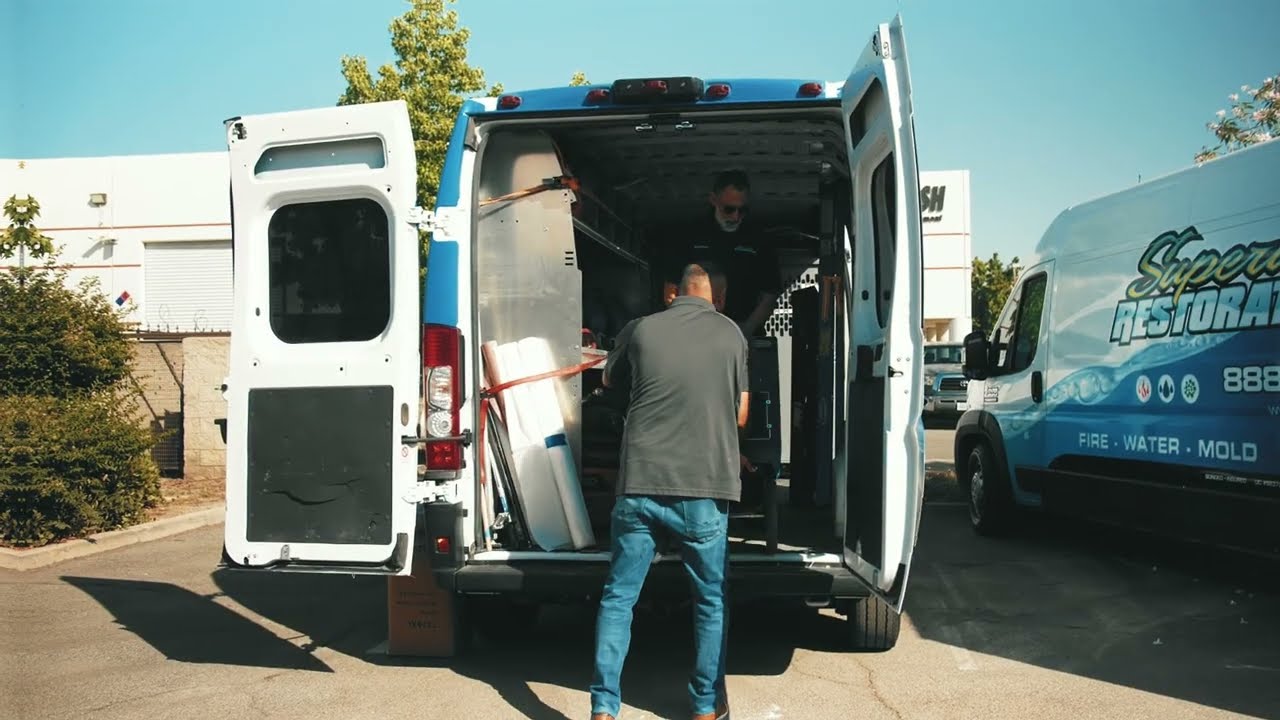





Mold Remediation in Santa Ana, CA
24/7 Emergency Response: (951) 579-4096
Superior Restoration provides mold inspection and remediation throughout the City of Santa Ana from our Anaheim office at 1260 South Simpson Circle, 8 miles north. Our IICRC-certified technicians reach Santa Ana in 12 to 18 minutes with containment equipment, HEPA filtration, and air-sampling tools. We have been remediating mold in Orange County homes and multi-family buildings since 2010, and Santa Ana’s combination of mild coastal climate and century-old housing makes it one of the more mold-prone cities we serve.
Why Mold Thrives Year-Round in Santa Ana
Mold needs three things: moisture, organic material to feed on, and a temperature range it tolerates. Santa Ana supplies all three nearly every day of the year. The city sits about 10 miles inland from the coast, close enough to live under the marine layer that pushes in most mornings, and its mild temperatures rarely drop low enough to slow mold growth. There is no winter freeze here to give a home a seasonal break. Combine that climate with the oldest and densest housing stock in Orange County, and you get a city where small moisture problems turn into mold problems faster than most owners expect.
The Marine Layer and a Climate With No Off-Season
The morning marine layer keeps humidity elevated through much of the spring and early summer, the stretch locals call June Gloom. Indoor surfaces in poorly ventilated rooms stay damp longer, and any existing moisture source, a slow plumbing leak, a past water event that was never fully dried, condensation behind furniture on an exterior wall, has a year-round window to grow mold. In drier inland cities, a leak might dry on its own before colonization starts. In Santa Ana, the ambient humidity often keeps materials wet enough for mold to take hold within the usual 24-to-48-hour window.
Old Housing Hides Moisture Behind Plaster
Santa Ana was incorporated in 1886, and the French Park and Floral Park historic districts have homes from the 1910s and 1920s built with lath-and-plaster walls. Plaster behaves differently from modern drywall. It can stay damp behind an intact-looking surface, hiding mold in the wall cavity long before any stain appears on the visible face. The mid-century homes in Logan, Delhi, and Artesia Pilar add a second hidden-moisture problem: slab-on-grade foundations where sub-slab moisture wicks up into framing and flooring, feeding mold along the base of walls. In both cases, what you see on the surface understates what is growing behind it, which is exactly why air sampling and moisture mapping matter before any removal starts.
Density, Shared Systems, and Renter-Heavy Housing
Santa Ana has one of the highest concentrations of multi-family and renter-occupied housing in Southern California. That changes mold in two ways. First, shared HVAC systems and common walls let moisture and spores move between units, so a bathroom or kitchen moisture problem in one apartment can seed growth in a neighbor’s. Second, mold in rental housing carries habitability and disclosure obligations under California law, which means documentation is not optional. We test, document, and remediate to a standard that holds up for tenants, landlords, and property managers alike.
Where We Find Mold in Santa Ana Homes
Behind Plaster in the Historic Districts
In French Park, Floral Park, and the older central neighborhoods, mold most often hides in wall cavities behind lath-and-plaster, around aging window frames, and in the base of exterior walls where decades of minor moisture intrusion have accumulated. Because plaster masks the problem, these are the homes where owners are most often surprised by how much growth a wall opening reveals.
Slab-Level Growth in Mid-Century Homes
The 1940s and 1950s slab homes in Logan, Delhi, and Artesia Pilar are prone to mold along the bottom plate of walls and under flooring, fed by sub-slab moisture and by the slow plumbing leaks common in homes with original copper and cast iron lines. Vinyl or laminate flooring laid over a damp slab traps that moisture and creates an ideal growth environment underneath.
Crawl Spaces and Raised Foundations
Older raised-foundation homes in the city have crawl spaces that stay humid under the marine-layer climate, especially in the lower-lying neighborhoods near the Santa Ana River corridor where the water table sits higher. Mold in a crawl space does not stay in the crawl space: spores travel up through floor assemblies into the living area, and musty odor is usually the first sign.
Bathrooms, Kitchens, and HVAC in Multi-Family Buildings
In Santa Ana’s dense apartment stock, the usual hot spots are poorly ventilated bathrooms, kitchens, and the HVAC systems that connect units. Tenants often report a persistent musty smell or visible growth on bathroom ceilings and around windows. Because these systems are shared, we assess neighboring units and the common air handling rather than treating one apartment in isolation.
Our Mold Remediation Process for Santa Ana
Call (951) 579-4096. Our Anaheim office is 8 miles from central Santa Ana, about 12 to 18 minutes away. Mold remediation is methodical work, and skipping steps is how mold comes back, so we follow the same documented sequence on every job.
Inspection and Air Sampling: We map moisture with meters and thermal imaging, identify the water source feeding the mold, and take air and surface samples. Without finding and fixing the moisture source first, any removal is temporary.
Containment: We seal the work area with plastic sheeting and set up negative air pressure so spores do not spread to clean parts of the home during removal. In multi-unit buildings, containment also protects neighboring units.
HEPA Filtration: Air scrubbers with HEPA filtration run throughout the project to capture airborne spores released during removal.
Removal: Porous materials with active growth, drywall, plaster, insulation, affected flooring, are removed and bagged inside containment. Non-porous surfaces are cleaned and treated. We remove what is colonized rather than spraying over it, because surface treatment of porous materials does not solve the problem.
Antimicrobial Treatment and Drying: Remaining surfaces are treated and the space is dried to target moisture levels with commercial dehumidifiers, verified by readings rather than guesswork.
Clearance Testing and Reconstruction: We confirm the remediation worked with post-remediation verification, ideally through an independent industrial hygienist, then rebuild what was removed. See our damage reconstruction service page for the rebuild scope.
Mold Remediation Cost in Santa Ana, CA
Mold remediation in Santa Ana typically runs $1,500 to $6,000 for a contained problem in a single area such as a bathroom, closet, or section of wall. Larger projects involving multiple rooms, significant material removal, or HVAC contamination range from $6,000 to $15,000 or more. Crawl-space and sub-slab remediation in the older neighborhoods can run higher because of access and the moisture-source repairs involved.
Insurance coverage for mold is narrower than for water or fire. Most policies cover mold only when it results directly from a sudden, covered water event, such as a burst pipe, and exclude mold from long-term leaks or deferred maintenance. We document the moisture source and the timeline carefully, because that documentation often determines whether a claim is covered. For mold that follows a water loss, see our Santa Ana water damage restoration page.
Mold, Renters, and Property Owners in Santa Ana
Given how much of Santa Ana’s housing is renter-occupied, mold is often a landlord-tenant matter as much as a building one. California’s implied warranty of habitability requires rental housing to be free of conditions that endanger health, and mold can qualify. For property owners and managers, the practical answer is the same one that protects everyone: find the moisture source, document the conditions, remediate to a verifiable standard, and keep records. We provide that documentation as part of the job, which gives owners a defensible paper trail and gives tenants confidence the problem was actually solved rather than painted over.
Why Santa Ana Property Owners Choose Superior Restoration
8 Miles From Our Anaheim Office. Fast response means we find and stop the moisture source before the mold problem grows, which keeps the remediation scope, and the cost, smaller.
We Find the Source, Not Just the Symptom. Mold is always a moisture problem first. We trace it to the leak, the slab, the crawl space, or the ventilation gap and fix that, so the mold does not simply return.
Multi-Family Experience. Santa Ana’s density means shared-system mold problems are common. We assess neighboring units and common HVAC rather than treating one apartment in isolation, and we document to a standard that works for owners, managers, and tenants.
IICRC Certified Firm. Every technician is certified to IICRC standards, including the S520 mold remediation standard. Containment, negative air, and verification are done by the book.
367 Google Reviews at 4.9 Average. Across our offices, a reputation built job by job since 2010.
Common Questions About Mold Remediation in Santa Ana
Is mold worse in Santa Ana than in inland Orange County?
In many homes, yes. Santa Ana’s mild, marine-influenced climate keeps humidity elevated and never delivers a winter freeze, so mold has a year-round window to grow. Pair that with the oldest housing stock in the county, where plaster walls and slab foundations hide moisture, and small problems become mold problems faster than they would in a drier inland city.
I can see mold on my bathroom ceiling. Can I just clean it myself?
A small patch of surface mold on a non-porous surface can sometimes be cleaned by a homeowner. The risk is that visible mold often signals a larger hidden problem, moisture in the wall or ceiling cavity behind it. If it keeps coming back, covers more than about 10 square feet, or comes with a musty smell, that points to a moisture source that needs to be found and fixed professionally.
How long does mold remediation take?
A contained single-area job usually takes 2 to 5 days, including drying and verification. Larger projects involving multiple rooms, crawl spaces, or HVAC contamination take 1 to 2 weeks. Reconstruction of removed materials adds time depending on scope.
Does my insurance cover mold remediation?
Sometimes. Most policies cover mold only when it results from a sudden, covered water event like a burst pipe, and exclude mold from gradual leaks or maintenance issues. We document the moisture source and timeline, which is what determines coverage. We are straight with you about what is likely covered before the work starts.
My tenant reported mold. What are my obligations as a Santa Ana landlord?
Under California’s implied warranty of habitability, rental housing must be free of conditions that endanger health, and mold can qualify. The protective step is to investigate promptly, find and fix the moisture source, remediate to a verifiable standard, and document everything. We provide that documentation so you have a defensible record.
Will you test the air to confirm the mold is gone?
Yes. We use post-remediation verification, ideally through an independent industrial hygienist, to confirm spore counts are back to normal before we close out and rebuild. Clearance testing is what separates a real remediation from a cosmetic one.
Contact Superior Restoration for Mold Remediation in Santa Ana
If you see or smell mold in your Santa Ana home or building, call our line at (951) 579-4096 or contact us online.
Serving Santa Ana From Our Anaheim Office
Superior Restoration, 1260 South Simpson Circle, Anaheim, CA 92806
(951) 579-4096
CSLB License #983759 | IICRC Certified Firm
Founded 2010 | Part of HighGround Restoration Group