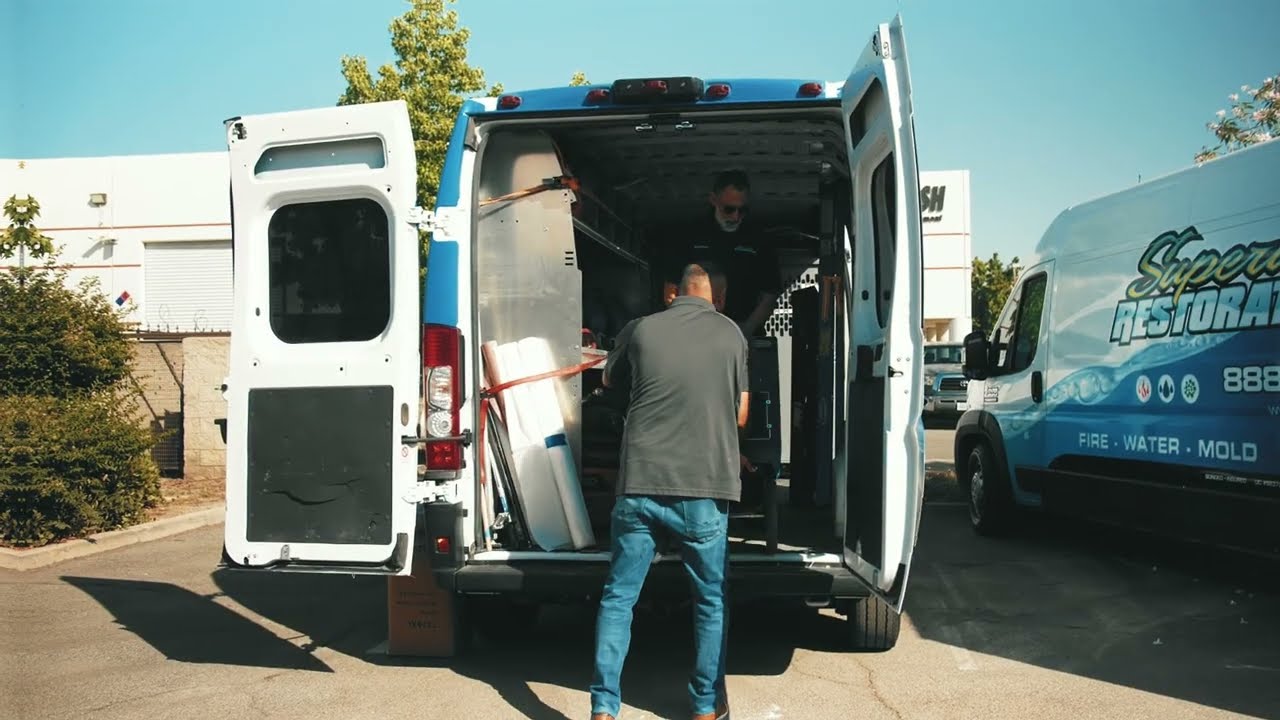





Water Damage Restoration in Long Beach, CA
24/7 Emergency Response: (951) 579-4096
Superior Restoration provides water damage restoration throughout the City of Long Beach from our Anaheim office at 1260 South Simpson Circle, 18 miles east via the 22 or 405. Our IICRC-certified technicians respond to Long Beach emergencies within 25 to 35 minutes. Long Beach is the 7th largest city in California, with a housing stock spanning a full century and water damage risks that range from river flooding to century-old plumbing failure. We have been restoring properties in the greater Los Angeles and Orange County region since 2010.
Why Long Beach Has Elevated Water Damage Risk
Water damage restoration in the City of Long Beach means working in a city defined by water. The Los Angeles River empties here. The San Gabriel River forms the eastern boundary. The Port of Long Beach handles 9 million shipping containers a year. And the neighborhoods in between have some of the oldest, most diverse housing stock in Southern California — from 1920s Craftsman bungalows in Belmont Heights to the Naples Island canal homes built on fill in 1903.
Two Rivers and an Ocean
The Los Angeles River reaches the Pacific at Queensway Bay on the southern tip of Long Beach. The San Gabriel River runs the entire eastern boundary of the city. The Dominguez Channel drains through North Long Beach. During significant storm events, all three systems carry massive volumes of water simultaneously. The February 2024 atmospheric river sequence tested every flood control channel in the city.
FEMA flood maps identify substantial flood zones along all three waterways and across the low-lying coastal neighborhoods. Properties in Belmont Shore, Naples Island, the Peninsula, and the downtown waterfront sit at elevations barely above sea level. King tides and storm surge events push ocean water into these areas from the south while river discharge presses from the north and east.
Naples Island — Living on Engineered Fill
Naples Island was constructed in 1903 as a planned residential community built on fill material in Alamitos Bay. The island’s canal system — modeled after Venice, Italy — runs alongside homes on three sides. These canals connect directly to the bay and fluctuate with tides. During king tide events and storm surge, canal water rises and can reach ground-floor levels on the lowest properties. The homes themselves range from 1920s original cottages to 1980s rebuilds, but all share the fundamental challenge of living on a low-elevation island surrounded by saltwater channels.
Century-Old Housing Stock
Long Beach has one of the oldest and most architecturally diverse housing inventories in Southern California. The 1933 Long Beach Earthquake — a 6.4 magnitude event that killed 120 people and destroyed much of the city — leveled thousands of structures. Many were rebuilt during the 1930s and 1940s, which means even the “rebuilt” housing stock is now 80 to 90 years old. The neighborhoods that survived the earthquake largely intact — Belmont Heights, California Heights, Bixby Knolls — have homes approaching or exceeding 100 years.
That age shows up in plumbing. Galvanized steel supply lines from the 1920s and 1930s are corroded to a fraction of their original diameter. Clay sewer laterals crack and collapse. Original knob-and-tube wiring in the oldest homes creates fire risk when water intrusion occurs near electrical systems. Every restoration job in Long Beach’s historic neighborhoods requires awareness of what’s inside the walls before demolition begins.
Land Subsidence From Oil Extraction
Long Beach sits atop the Wilmington Oil Field, one of the largest in the contiguous United States. Decades of oil extraction caused portions of the city to sink up to 29 feet before water injection programs stabilized the subsidence in the 1960s. The THUMS islands — visible offshore as artificial islands — are part of the ongoing extraction and injection operation. The historical subsidence altered drainage patterns, compressed underground utilities, and left some neighborhoods at lower elevations than originally designed. This matters for water damage because drainage systems engineered for one elevation now operate at another.
Common Water Damage Causes in Long Beach
Plumbing Failure in Pre-War Homes
Belmont Heights, California Heights, Bixby Knolls, and Wrigley have concentrations of homes built before 1940. Galvanized supply lines in these homes are 85 to 100 years old. They corrode from the inside out, first reducing water pressure and eventually developing pinhole leaks at joints and fittings. When a galvanized line fails catastrophically — a joint lets go entirely — the water flow is significant and immediate. We respond to these emergencies in Long Beach’s historic neighborhoods regularly.
Flooding on Naples Island and the Peninsula
Naples Island and the Belmont Shore Peninsula face direct tidal and storm surge exposure. King tides push water through the canal system and into ground-floor spaces. Storm events combine high surf, elevated tides, and rainfall simultaneously. Standard homeowner’s insurance does not cover any of this. FEMA flood insurance is required for external water events. We handle the restoration and documentation regardless of coverage type.
Slab Leaks in Post-War Neighborhoods
North Long Beach, Los Altos, Lakewood Village, and the Plaza area were built primarily in the 1940s through 1960s on slab foundations. Copper supply lines beneath these slabs have been subjected to 60 to 80 years of ground movement — including the ongoing effects of oil field subsidence — and the moderately hard water from Long Beach Water Department. Slab leaks here develop at stress points where ground movement has flexed the pipe repeatedly over decades.
Multi-Story Cascade Failures
Long Beach’s downtown core has seen extensive new high-rise and mid-rise construction over the past 15 years. These multi-unit buildings concentrate water supply lines, HVAC systems, and fire suppression piping across multiple floors. When a supply line fails on the 8th floor, water cascades through 7 units below before anyone identifies the source. We handle multi-unit cascade events in Long Beach high-rises and coordinate with building management and multiple insurance carriers simultaneously.
Our Water Damage Restoration Process for Long Beach
Call (951) 579-4096. Our Anaheim office at 1260 South Simpson Circle is 18 miles from central Long Beach. Response time runs 25 to 35 minutes via the 22 freeway or 405. For emergencies in East Long Beach near Cal State Long Beach, we can arrive closer to 25 minutes.
Assessment: Thermal imaging and moisture meters map the full extent of water intrusion. In Long Beach’s historic homes, we assess wall assemblies carefully before demolition — knob-and-tube wiring, lead paint, and asbestos-containing materials are common in pre-1940 construction and require different handling protocols.
Water Extraction: Truck-mounted extractors remove standing water. For Naples Island and coastal flooding events, we deploy submersible pumps for below-grade water. For high-rise cascade events, we extract from multiple units simultaneously.
Structural Drying: Commercial air movers and dehumidifiers bring materials to target moisture content. Long Beach’s coastal humidity requires heavier dehumidification than inland jobs. Historic plaster walls in older homes dry differently than modern drywall — they hold moisture longer and require adjusted monitoring protocols.
Cleaning and Sanitization: Saltwater, sewage backups, and river floodwater all require different contamination protocols. We assess the water category on every Long Beach job and apply the appropriate IICRC standard.
Reconstruction: Drywall, flooring, cabinetry, painting, and period-appropriate repairs in historic homes. Our crew handles reconstruction from demolition through final finishes. For historic properties in designated neighborhoods, we work with preservation requirements when applicable.
Water Damage Restoration Cost in Long Beach, CA
Restoration costs in the City of Long Beach vary dramatically by neighborhood and property type. A single-room pipe burst in a North Long Beach tract home might run $2,500 to $4,000. The same scope of damage in a Belmont Heights Craftsman with original hardwood, plaster walls, and period trim can cost $6,000 to $10,000 because restoration requires matching materials and methods from a century ago.
Most Long Beach homeowners pay between $4,000 and $10,000 for a standard water damage event. Multi-unit high-rise events with multiple affected units and shared-wall complications can exceed $25,000. We document everything for insurance — photos, moisture readings, thermal imaging, material specifications — to support full replacement cost claims.
Why Long Beach Property Owners Choose Superior Restoration
18 Miles From Our Anaheim Office: We reach Long Beach in 25 to 35 minutes. Close enough for true emergency response across this geographically large city.
Historic Home Experience: Long Beach’s pre-war housing requires different restoration approaches than modern construction. Plaster walls, old-growth lumber, period hardware, knob-and-tube wiring — we have worked in homes spanning every decade from the 1900s forward.
IICRC Certified: All technicians certified to S500 water damage restoration standards. S520 mold remediation protocols available when needed.
367 Google Reviews, 4.9-Star Average: Our Anaheim office has 43 reviews at 5.0 stars. Reputation built across Southern California over 16 years.
Full-Service Restoration: Extraction, drying, sanitization, and complete reconstruction. One company from the emergency call through final inspection.
Common Questions About Water Damage in Long Beach
How fast can you get to Long Beach?
Our Anaheim office is 18 miles from central Long Beach. We arrive in 25 to 35 minutes via the 22 or 405. For East Long Beach near CSULB, closer to 25 minutes. We respond 24/7 including holidays.
My home in Belmont Heights was built in the 1920s. Does that change the restoration approach?
Yes, significantly. Pre-war homes have plaster walls that dry differently than modern drywall, original hardwood that must be treated carefully, and may contain knob-and-tube wiring or lead paint that require specialized handling. We assess these conditions before starting any demolition and adjust our protocols accordingly.
Does insurance cover flooding on Naples Island?
Standard homeowner’s insurance does not cover external flooding from tidal surge, canal overflow, or storm events. FEMA flood insurance is required. Naples Island falls within FEMA flood zones, and most mortgage lenders require flood insurance for properties there. We handle restoration and provide the documentation needed for flood insurance claims.
How long does restoration take in Long Beach?
Extraction and structural drying run 3 to 6 days depending on materials — plaster walls in historic homes take longer to dry than modern drywall. Reconstruction depends on scope and material matching. Standard events complete in 2 to 3 weeks. Multi-room or historic home restorations can run 6 to 8 weeks when period-appropriate materials are involved.
Do you handle multi-unit water damage in Long Beach high-rises?
We do. We coordinate extraction and drying across multiple affected units, work with building management, and handle documentation for multiple insurance carriers simultaneously. High-rise cascade events are complex, and we have the equipment and experience to manage them.
Should I worry about mold in my Long Beach home?
Long Beach’s coastal humidity creates baseline moisture conditions that favor mold growth. After water damage, mold can colonize within 24 hours during warm months. The risk is especially high in older homes with plaster walls that hold moisture longer than modern drywall. Professional drying with daily monitoring is essential. Do not attempt to dry a Long Beach home with fans from the hardware store.
Contact Superior Restoration for Water Damage in Long Beach
Call our 24/7 emergency line at (951) 579-4096 or contact us online.
Serving Long Beach from our Anaheim Office
Superior Restoration | 1260 South Simpson Circle, Anaheim, CA 92806
(951) 579-4096
CSLB License #983759 | IICRC Certified Firm
Founded 2010 by Skylar Lewis | Part of HighGround Restoration Group